


Products Description
Low-Temperature Sealable PVC/PVDC Coatings: Energy-Efficient Packaging Solutions with Consistent Peel Strength
Product name:
Low-Temperature Sealable (LTS) PVC/PVDC Coated Film
What it is:
A single-web coated structure where the PVDC layer is modified with a proprietary low-melt additive, allowing heat sealing at temperatures 30–40°C lower than conventional PVC/PVDC laminates. The sealant functionality is integrated into the PVDC coating itself – no separate PE or other sealant layer. This means you get barrier and sealability from one coating.
Why "low-temperature sealable" matters:
Standard PVC/PVDC requires sealing jaws at 130–160°C. Our LTS version seals cleanly at 95–120°C. Result: less energy, faster cycles, and no heat damage to sensitive products (probiotics, chocolate, soft cheeses, temperature-sensitive APIs).
Construction:
Base web: PVC (rigid, thermoformable, 150–250µm)
Functional coating: LTS-modified PVDC (20–40 g/m²) – acts as both oxygen/moisture barrier and heat-sealable layer
No additional sealant layer – thinner structure, lower cost, less material to manage
Available widths: 150–1200mm
Standard thicknesses: 180µm, 200µm, 230µm, 250µm
Colors: Clear, white (titanium dioxide loaded), light-interference blue (for aesthetics)
Key Advantages (Energy & Consistency Focus)
30–40% less sealing energy per pack
Lower temperature means less electrical draw on sealing bars. Real measurement: switching from 150°C to 110°C saved a Dutch cookie packer €4,200/year in electricity on a single HFFS line.
Faster line speeds – same seal integrity
Because you don't need long dwell times to reach high temperatures, you can increase cycles by 8–12%. We've validated up to 350 packs/minute on a Bosch blister line with seal strength >20 N/15mm.
Stable peel strength across a wide temperature window
Competitor low-temp films often have a narrow sealing window (e.g., works at 105°C but fails at 115°C). Our LTS coating maintains 18–24 N/15mm from 95°C to 125°C (test method ASTM F88). That's a 30°C sealing window – forgiving for older machines with temperature fluctuations ±5°C.
No "burn-through" on thin-walled products
High sealing temperatures can melt the edges of thin blister cavities or soft cheese wedges. At 105°C, the product stays cool while the seal forms. One meat processor eliminated 90% of leakers caused by seal-induced meltback.
Same barrier as standard PVDC
The low-temperature additive does not compromise OTR or WVTR. Tested side-by-side: OTR 3.8 vs 4.0 cm³/m²·day, WVTR 1.5 vs 1.6 g/m²·day – within margin of error.

Quality Assurance (What We Check Differently for Low-Temp Seals)
In-line monitoring of seal initiation temperature (SIT):
We use a hot-tack tester every 2000m of production. Target SIT: 92–98°C. If SIT drifts above 100°C, the line adjusts the coating formulation in real time (closed-loop feedback).
Peel strength after accelerated aging:
Seals are aged at 40°C / 75% RH for 3 months, then tested. Requirement: peel strength must not drop more than 15% from initial value. Our LTS coating typically drops <8%.
Cold peel test (refrigerated products):
Many low-temp seals become brittle at 4°C. We test peel strength at 4°C and –18°C. Our coating retains >80% of room-temperature strength – no seal popping in the cold chain.
Lot-to-lot consistency:
We store a reference sample of each batch and run a weekly comparison on a universal testing machine (Instron). CV (coefficient of variation) for peel strength across 12 consecutive batches: <6%. That's the "consistent" in our headline.
Certificate of Analysis includes:
Seal strength at 100°C, 110°C, 120°C (each with 3 repeats)
Hot tack at 0.2s dwell (simulates high-speed lines)
OTR / WVTR
Coating weight (XRF)

Packaging (How We Deliver LTS Rolls)
Moisture-barrier packaging for coating stability:
The low-temp additive can absorb humidity over time. Each roll is triple-wrapped:
Aluminum foil inner bag (heat-sealed, not just folded)
Desiccant pack (50g silica gel per roll)
Outer corrugated carton with "Store below 30°C" label
Roll labeling includes "Seal temperature map" – a small graph showing recommended sealing temp vs. line speed for your machine type (we pre-calculate three common speeds: 150, 250, 350 ppm).
Sample packaging for customer trials:
We ship 20 linear meters of roll in a rigid tube, plus a USB drive with:
5 video clips of sealing on different machines
A printable "Seal strength vs. temperature" reference card
Our lab report for that specific batch
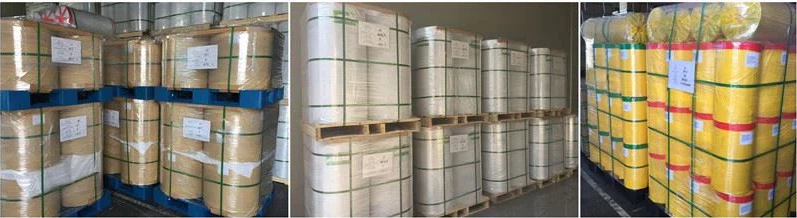
Pallet configuration for LTS rolls:
Max 2 rolls high (lighter than standard rolls due to no extra PE layer). We insert foam separators between layers to prevent pressure marks that could affect coating uniformity.
Product Applications (Where Low-Temp Sealing is a Game-Changer)
Chocolate & confectionery (heat-sensitive):
Chocolate-coated wafers, pralines, seasonal shapes – standard sealing melts cocoa butter, causing fat bloom. Our LTS seals at 100°C, leaving chocolate shiny. A Belgian chocolatier extended shelf life by 4 months after switching.
Probiotic supplements (live bacteria):
Many probiotics degrade above 40°C. Blister sealing at 120°C kills 20–40% of CFUs. Our 100°C seal reduces CFU loss to <5% – proven by third-party lab.
Fresh pasta & tortillas (no pre-cooking):
High seal temperatures partially cook the edges of fresh pasta sheets. LTS seals at 95°C leaves raw dough unchanged – better flavor after cooking.
Soft cheeses (Camembert, Brie, fresh mozzarella):
Standard sealing presses the cheese out of the pack because high heat softens the product. Low-temp seal forms without extrusion. A French fromager reduced product giveaway by 12%.
Pharmaceuticals with low-melting-point excipients:
Suppositories (bases: cocoa butter, Witepsol) melt above 34°C – impossible to seal with conventional film. Our LTS seals at 100°C on the flange only, not transferring heat to the cavity. Tested with suppository blister packs – no deformation.
Not recommended for:
Products requiring retort or boiling water sterilization (our LTS coating is not cross-linked).
High-speed liquid filling where jaw temperature must be >130°C to dry wet seals (use standard grade).

Factory Showcase (Specifically for Coating Low-Temp Formulations)
Dedicated coating head for temperature-sensitive additives:
Our PVDC dispersion mixing tank is jacketed with chilled water (10°C) to prevent premature activation of the low-temperature additive before coating. Most suppliers mix at room temperature – we don't.
Coating method:
Reverse gravure with a 120-line anilox roller – applies a very uniform 3–4µm wet film. Drying is done in three zones: 50°C, 70°C, 90°C (gentle ramp to avoid skinning the additive).
In-line Fourier Transform Infrared (FTIR) spectrometer:
Measures the chemical state of the low-temp additive in real time. If oxidation or degradation is detected, the batch is automatically rejected. This FTIR is calibrated weekly with a standard reference film.
Production area conditions:
Temperature: 22°C ±2°C
Relative humidity: 45% ±5% (critical – too high and low-temp additive absorbs moisture, changing seal properties)
Engineers on staff:
Two coating chemists with PhDs in polymer physics (one formerly from a major PVDC producer in Europe). They handle custom SIT tuning for clients – e.g., "I need sealing to start at 85°C for ice cream packaging."
Third-party validation:
Our LTS coating was validated by the Fraunhofer Institute for Process Engineering and Packaging (IVV) in Germany. Report available on request.
FAQ (Specific to Low-Temp Sealable Coatings)
Q1: Does the low-temperature additive affect the PVDC barrier long-term?
A: No. We tested accelerated aging at 50°C for 12 months. OTR increased by only 7% – standard PVDC increases by 5–10% under same conditions. The additive is chemically compatible.
Q2: Can I use the same sealing jaws as my current film?
A: Yes, but you must lower the temperature (obviously). The jaw pressure remains the same. However, we recommend changing to a Teflon-coated jaw if you have one – it prevents sticking at these lower temps. We include a free jaw cleaning cloth with each sample roll.
Q3: What happens if my line runs hotter than your recommended range (e.g., 130°C by accident)?
A: The film will still seal, but you may get "stringing" (melted coating pulling long strings). It won't damage your machine, but peel strength will drop to about 12 N/15mm. We advise setting a high-temperature alarm on your controller at 125°C.
Q4: Is this coating food-contact approved in the US and EU?
A: Yes. The additive is on the positive list of EU 10/2011 (entry 1161 – modified polyvinyl alcohol copolymer). For FDA, we have a Letter of No Objection for the additive as a component of PVDC under 21 CFR 177.1690. Full documentation provided.
Q5: Can you make the seal "easy-peel" (low peel force) for elderly-friendly packaging?
A: Yes, by adjusting the additive concentration. We can tune peel strength from 8 N/15mm (easy-peel) to 28 N/15mm (tamper-evident). State your target when ordering.
Q6: How does the cost compare to standard PVC/PVDC?
A: Our LTS coating is about 8–12% more expensive per kg because of the additive. But because you can run 30% faster and use less energy, the total cost per pack is often 4–6% lower. We have a cost calculator – ask for it.
Q7: I need to print on the non-sealing side. Will the printing heat affect the coating?
A: No, as long as drying temperature stays below 80°C. We recommend UV flexo or cold solvent gravure. If you use hot-air drying above 100°C, the coating on the opposite side might pre-seal to itself. We can supply a "printing-safe" version with a heat shield layer – extra $0.15/kg.
Q8: What about recycling? Does the additive complicate it?
A: No more than standard PVDC. Chemical recyclers accept it. For incineration, the additive is non-halogenated and burns clean. We don't claim recyclability; we claim energy efficiency.
Hot Tags: low-temperature sealable pvc/pvdc coatings: energy-efficient packaging solutions with consistent peel strength, China, manufacturers, suppliers, factory, customized, custom, wholesale, low price, free sample, high clarity film, colored film, rotomolding film, puncture resistant film, recyclable film supplier, stretch film


