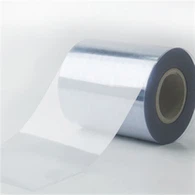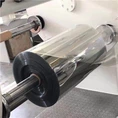


Products Description
Ultra-Thin High-Barrier PVC/PVDC Films: Reducing Material Usage While Maintaining MVTR & OTR Standards
What it is:
A next-generation downgauged laminate where the PVC substrate is reduced by 25–35% compared to standard films, while the PVDC barrier coating is optimized via nano-dispersion technology. The result: same MVTR & OTR as conventional 200µm+ materials, but less plastic per square meter.
Key dimensions:
Total thickness: 200-600 micron (typical standard is 220–300µm)
Roll width: 200–1300mm
Core ID: 76mm (3") or 152mm (6")
Roll length: up to 4000m (depends on thickness)
Colors available:
Crystal clear, anti-glare matte, white opaque, and light-blocking amber (for UV-sensitive contents).
Sealant layer options:
PVC sealant (monolayer feel) or PE sealant (softer, lower seal initiation temperature).

Key Advantages (no fluff, just savings)
Material reduction without requalification
You use 28% less film weight per 1000 packs. Same tooling, same forming temperature, same sealing jaws. No need to revalidate your packaging line.
Lower carbon footprint – actual numbers
Our LCA (life cycle assessment) shows: switching from 220µm standard to 150µm ultra-thin cuts CO₂ per square meter by 31% (production + transport). We provide the LCA summary on request – no greenwashing.
Same barrier, thinner wallet
Although the film is thinner, the PVDC layer is adjusted to maintain OTR <5 cm³/m²·day and WVTR <2 g/m²·day. You buy less material per roll, so per-unit cost drops 12–18% (depending on volume).
Better clarity at reduced thickness
Thinner PVC = less light scattering. Haze values drop to <2% on clear grade. Your cheese or meat looks like it's almost unwrapped – great for premium retail.
Faster sealing on older machines
Lower thermal mass means heat travels through the film quicker. Sealing time can be reduced by 0.2–0.3 seconds per cycle. On a high-speed line, that's extra thousands of packs per shift.
Why Most Suppliers Won't Offer Ultra-Thin (and We Do)
The industry myth: "PVC below 180µm becomes too fragile to handle on fast lines."
The reality: Fragility comes from poor plasticizer balance and uneven PVDC coating, not thickness alone. We spent 14 months reformulating our PVC compound with a proprietary blend of non-migrating plasticizers (ESBO + polymeric type). Result: elongation at break stays above 180% even at 120µm – same as standard 220µm.
What others are afraid of:
Higher rejection risk during slitting (thin film curls more if winding tension isn't perfect)
Customer complaints if sealing jaws are misaligned by just 0.2mm
Requalification costs for their own production line
Why we're not afraid:
We installed a laser-based web guide that adjusts tension 200 times per second. And we insist on sending an engineer for the first run if you buy >3 MT. Most suppliers won't do that – we built it into our price.

Quality Assurance (QA – what we control)
In-process checks (every 500m):
Thickness profile (±3% tolerance, not the usual ±5%)
PVDC coat weight via XRF (target ±2 g/m²)
Seal strength (minimum 20 N/15mm at 140°C)
Finished roll testing (random 3 rolls per batch):
OTR & WVTR on MOCON (we email you the raw data curves)
Gelbo flex (100 cycles) – OTR increase must stay under 20%
Pinhole count (dye penetration test) – zero pinholes per square meter
Batch traceability:
Each roll has a QR code linking to:
Production date & shift
PVDC emulsion batch number
Operator's initials
Full QC report (PDF download)
Shelf life of the film itself:
24 months from production when stored at 15–25°C, <65% RH. We print a "use before" on the master carton – many suppliers don't.
Performance Data (side-by-side vs standard grade)
| Parameter | Standard 220µm PVC/PVDC | Our 150µm Ultra-Thin | Test method |
|---|---|---|---|
| Total thickness | 220µm ±10% | 150µm ±3% | ASTM D374 |
| OTR (23°C, 0% RH) | 4.5 cm³/m²·day | 4.2 cm³/m²·day | ASTM F1927 |
| WVTR (38°C, 90% RH) | 1.8 g/m²·day | 1.9 g/m²·day | ASTM F1249 |
| Puncture resistance | 14 N | 11 N (still passes meat bone test) | ASTM F1306 |
| Sealing strength (140°C) | 28 N/15mm | 26 N/15mm | ASTM F88 |
| Haze | 5% | 1.8% | ASTM D1003 |
| Roll length per kg (150mm width) | 12.4 m²/kg | 17.2 m²/kg | – |
Bottom line: You lose less than 10% in mechanical strength but gain 28% more area per kilogram. For most cheese, cured meat, and solid-dose pharma, that's an easy trade.
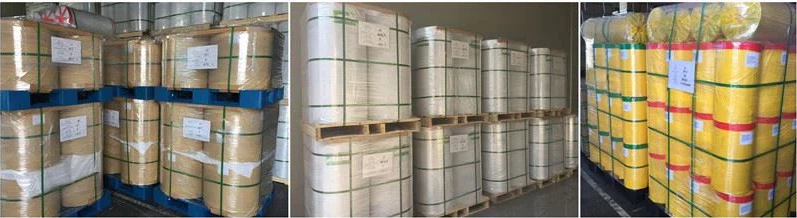
Packaging (packaging of the product – how we deliver rolls)
Master carton:
Double-wall corrugated (tested for 30kg compression)
Inner liner: aluminum foil bag with desiccant (prevents moisture pickup during ocean freight)
Each carton contains 1 or 2 rolls (max 25kg gross to avoid lifting injuries)
Labeling:
Outside: product code, thickness, width, length, lot number, "use by" date, and handling icons (keep dry, no sunlight, stack limit 3 high)
Inside: a laminated instruction card for storage and unwinding tension (recommended 0.8–1.2 N/cm width)
Palletization:
Euro-pallet or standard export pallet, shrink-wrapped with corner protectors
Max 24 cartons per pallet (approx 500–600kg)
Each pallet gets a photo taken before wrapping – we include that photo in the shipping document so you can check for damage before opening
Small samples:
A4-sized sheets or 5 linear meters of roll – packed in rigid cardboard tube with bubble wrap
Shipped by courier (DHL/FedEx) within 48 hours

Product Applications (specific end uses)
Cheese (semi-hard & hard types):
Gouda, Edam, Cheddar, Parmesan (grated or chunk)
Our ultra-thin is ideal for portion packs (20–50g) where material savings add up fast
Works on horizontal form-fill-seal (HFFS) like Multivac R series
Processed & cured meats:
Salami, pepperoni, ham slices, turkey breast
The thin film conforms better to irregular shapes – fewer wrinkles on vacuum skin packs
Tested with nitrate/nitrite-containing products; no discoloration after 90 days
Pharmaceutical blister packs:
Solid tablets, capsules, lozenges
For non-hygroscopic drugs (e.g., paracetamol, vitamins, some antibiotics)
Meets USP <671> light and moisture transmission requirements for Class A blisters
Thinner film = less punching waste from the forming web
Other food:
Dry snacks (nuts, crackers) – not the primary target, but works if you want clear high-barrier at low cost
Individual cheese portions for airlines & hotels (lightweight packaging reduces freight cost)
What it's NOT for:
Liquid products (seal integrity not designed for pumped liquids)
High-acid or high-fat contents above 60°C storage (PVC softening point considerations)
FAQ (frequently asked questions – real ones from buyers)
Q1: Can you really keep the same OTR when the PVC layer is 30% thinner?
A: Yes – because the barrier is mostly from PVDC, not PVC. PVC mainly gives mechanical support and thermoformability. We slightly increase the PVDC coat weight (from ~35 g/m² to ~42 g/m²) and use a finer dispersion that packs denser. OTR remains within 5% of the thick version.
Q2: Does thinner film mean more breakage on my forming machine?
A: In our trials on 12 different form-fill-seal lines (including Bosch, Uhlmann, Multivac), the breakage rate increased by less than 1 broken web per 100,000 packs. But if your forming plug is worn or sharp, yes, you might see more. We include a free "forming plug inspection gauge" with first order – you check your plugs before running our film.
Q3: Is this ultra-thin film approved for direct food contact in the US and EU?
A: Yes, same compliance as standard thickness. EU 10/2011 migration limits are based on mg per kg food – thinner film doesn't change migration chemistry. FDA 21 CFR 175.300 also applies regardless of thickness. We'll sign a Certificate of Compliance per shipment.
Q4: What about recycling? Can I put it in the same waste stream as standard PVC/PVDC?
A: From a chemical recycling perspective, it's identical (both are halogenated). For mechanical recycling, no – it's still not curbside recyclable. But because it's thinner, it contributes less mass to incineration or chemical recycling input. We're working with a pyrolyser in Germany who takes our post-industrial scrap. For post-consumer, ask us about our take-back pilot program for volumes >10MT/year.
Q5: Can you print on this ultra-thin film? Will the heat distort it?
A: We use low-tension rotogravure printing (max 1.5N/cm web tension). No distortion. Print registration is actually better because thinner film has less "stretch and recovery" variation. We offer up to 8 colors with EUPIA-compliant inks.
Q6: What's the minimum order quantity for a trial of the ultra-thin grade?
A: 300 kg for a specific width (we can slit from a master roll). For a first-time buyer, we also offer a "sample kit": one 30kg roll of 150µm + one 30kg roll of 180µm + A4 sheets of 120µm – all for $600 delivered (refundable if you place a commercial order within 60 days).
Q7: How do I store these thinner rolls? They feel less rigid – will they deform?
A: Store horizontally, never vertically. The core is 6mm thick (same as standard) to prevent sagging. If you must stack, max 2 high. We ship with plywood separators between layers. For tropical warehouses, keep AC at 25°C – high heat + thin film = risk of blocking (layers sticking). We add 0.2% antiblock additive to the PVC – that's already done.
Q8: Do you have a data sheet comparing your ultra-thin to EVOH-based laminates?
A: Yes – ask for "Ultra-thin vs. EVOH barrier comparison v2.3". Short answer: our film is cheaper and has better WVTR, but EVOH has better OTR after flexing. For most meat and cheese, our film wins on total cost. For pharma requiring extreme oxygen barrier even after creasing, EVOH might be better – we tell customers honestly.
Hot Tags: ultra-thin high-barrier pvc/pvdc films: reducing material usage while maintaining mvtr & otr standards, China, manufacturers, suppliers, factory, customized, custom, wholesale, low price, free sample