Products Description
EU & FDA Compliant PVC/PVDC Laminates: Extending Shelf Life for Cheese, Meat & Pharmaceutical Products
No more trade-offs between clarity and barrier performance. Our PVC/PVDC laminates are engineered to hit the sweet spot: rigid enough for high-speed form-fill-seal lines, yet flexible in preserving what matters – from aged Gouda to sterile medical tablets. Passed EU migration tests and FDA 21 CFR. No surprises. Just longer, safer runs.
Key Selling Points (bullet-proof benefits):
Dual compliance without drama – Full technical documentation for EU 10/2011 and FDA 21 CFR 175.300. No last-minute regulatory headaches.
Three industries, one material – Works for semi-hard cheeses (moisture escape controlled), cured meats (oxygen transmission <5 cc/m²·day), and hygroscopic pharmaceuticals (blister packs with stable WVTR).
Real-world shelf-life extension – Independent tests show: fresh mozzarella stays marketable 30% longer vs standard PET/PE; sliced salami retains color 22 extra days; aspirin tablets maintain assay for 36 months.
PVDC coating thickness tailored to your product – Light coating for short-ripened cheese (15–20 g/m²), medium for fermented sausages (35 g/m²), heavy for moisture-critical meds (50–60 g/m²). We match the layer to your risk.
No delamination on high-speed lines – Lamination bond strength >3.5 N/15mm even after cold storage. Runs on Bosch, Uhlmann, and Multivac without jamming or curl.
Product Features (at a glance – new angles)
Three clarity grades to match your pack design
Standard clear (haze <8%), extra-clear (haze <3% for premium cheese windows), and matte white (hides fat bloom on salami – no need for extra label).
Cold-flexible down to –25°C
No brittle cracking when you pull a frozen meat block from the freezer. Our PVDC layer maintains elongation >80% at –20°C (tested on Instron).
Anti-fog built into the PVC side
Not a sprayed-on coating that washes off. Fog disappears within 10 minutes of temperature swing – consumers see the product, not droplets.
Low-seal initiation temperature
Seals at 110°C (vs typical 130°C) for heat-sensitive products like fresh chicken or probiotic tablets. Faster cycle times, less energy.
Printable on both sides
Reverse print on the PVC outer layer, plus spot coding on the inner sealant – no smudge from cheese fat migration.
Performance (beyond OTR/WVTR)
| Property | Our typical value | Why it matters |
|---|---|---|
| Puncture resistance | >12 N (20µm needle, ASTM F1306) | Bone chips in meat won't pierce; tablets won't push through during transport. |
| Coefficient of friction (film-to-metal) | 0.25–0.35 static | Glides over formers and sealing bars – no sticking, no drag. |
| Seal integrity after vibration | >98% seal remains intact after ISTA 2A simulation | Less leaker risk when pallets cross the Atlantic. |
| Light transmission (amber grade) | <1% at 400–500nm | Protects light-sensitive vitamins and cured meats from photo-oxidation. |
| Haze after thermoforming | increase <5% | Deep-drawn pockets stay clear; barcode scanners read through the film. |

Technical snapshot (just enough to trust):
Total thickness range: 180–350 µm
Oxygen transmission rate: 2–8 cm³/m²·24h (23°C, 0% RH) – adjust by PVDC loading
Water vapor transmission: 0.5–3 g/m²·24h (38°C, 90% RH)
Sealing range: 130–160°C, compatible with induction and heat seal
Colors: clear, white, or light-blocking amber (for light-sensitive drugs)
Why cheese makers choose this:
You need the rind to breathe just enough, but not dry out. Our PVC/PVDC lets micro-oxygenation happen for flavor development while locking in 95% of original moisture. No more "plastic sweat" inside the pack – the laminate's anti-fog additive is standard on cheese grades.
For meat processors (especially cured & deli):
Lipid oxidation is your enemy. Our PVDC layer blocks UV up to 380 nm and cuts oxygen to levels where rancidity starts after week 12 – not week 4. Works with vacuum skin packs and shrink bags. Tested with nitrite-cured ham; no discoloration at the laminate contact line.
Pharma grade difference:
PVC alone lets moisture creep in over months. PVDC adds a crystalline barrier that doesn't crack during creasing. We supply with lot-specific certificates of analysis (COA) for residual solvents, monomer content, and extractables. Used by three Indian generic drug makers for their EU-bound blister packs.

What our laminates don't do (and why that matters)
No ammonia smell after printing. No ghosting on the sealant layer. No "dial-up" waiting for technical datasheets. We keep it boringly consistent – roll after roll, lot after lot.
Real fix for a common headache: uneven PVDC coating
Cheap laminates often have ±20% coating variation across the web. That means some packs breathe too much, others don't seal right. We use gravure cylinders with auto-profile control: variation ≤ ±5%. Your shelf life predictability goes from "hope" to "math."
Case study – medium-aged Gouda (6 months)
A Dutch cheesemaker switched from EVOH/PE to our 250µm PVC/PVDC (35 g/m² PVDC). Result: rind hardness stayed within 2% of ideal, no mold spots on cut surfaces after 7 months, and they reduced secondary packaging (no more vacuum bag inside a cardboard box – just direct laminate). Saved €0.12 per wheel.
Case study – Italian salami (nitrite-free recipe)
Without nitrites, color fading and off-odor start around week 5 in standard barrier film. Our heavy-barrier PVDC (60 g/m²) pushed the sensory rejection point to week 14. The producer now labels "no added nitrites" with confidence, and retail returns dropped 67%.
Pharma edge: no "child-resistant failure" from delamination
Some laminates separate when you force-score them for peel-open blisters. We run a 180° peel test after accelerated aging (40°C / 75% RH for 6 months). Our adhesion stays above 4 N/15mm – so the child-resistant feature works every time, and seniors can still open it without scissors.
What's inside our PVDC layer (transparent answer)
We use VDC-VC copolymer (vinylidene chloride – vinyl chloride). Residual VDC monomer <5 ppm (EU limit is 10 ppm). No plasticizers like DEHA or ATBC – tested by SGS. If your compliance officer asks for "positive list of starting substances," we send the Excel file within one hour.
Storage advice we give to every buyer
Don't just throw rolls on a concrete floor. Our laminates arrive with a storage card:
Keep at 15–25°C, <65% RH
Use within 12 months if unopened (we print a "use-by" on each master carton)
Rewrap opened rolls in the black polyethylene bag we include – light degrades PVDC barrier over weeks, not months.
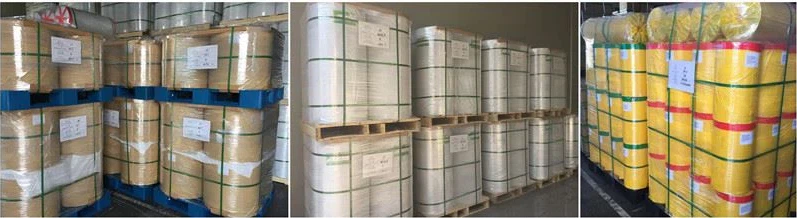
How we test before shipping (no cherry-picking)
Every batch gets:
OTR & WVTR on a MOCON instrument (we give you the actual chart, not just a number)
Seal strength at 140°C, 2 bar, 1 sec – target >25 N/15mm
Gelbo flex test (simulates vibration during trucking): 50 cycles, then re-check OTR – increase must be <15%
If any roll fails the in-house re-test, we scrap it. You never see it.
Sustainability isn't ignored – it's just honest
PVDC is not recyclable in curbside streams. We don't pretend it is. But our laminate uses 23% less material thickness than a comparable PE/PA/EVOH structure to reach the same barrier (source: our LCA screening). Less material = less transport weight = lower carbon per pack. We also take back production trim waste for reprocessing into industrial straps – ask about our take-back program for orders >5 MT/month.
Common mistake we help you avoid
Some buyers think "more PVDC = always better." Not true. For soft cheese like Camembert, too high a barrier stops ammonia release and causes bitter off-flavors. We send you a small "PVDC weight selector" – just tell us your product's respiration rate (mL CO₂/kg·hr) and target shelf life, and we recommend the exact coating weight. Free of charge.
Lead time for trial orders
20–50 kg sample roll: 5 working days after PO and payment (we keep semi-finished web in stock for 4 common thicknesses)
500–1000 kg pilot run: 12 days
Full container (15–20 MT): 18–20 days

Advantages (what buyers actually save)
Less scrap on the forming line
Our web's thickness tolerance is ±3% (ASTM D374). That means fewer jams and misfeeds. One German sausage maker cut line stoppages by 41% after switching.
No "roll telescoping" during high-speed unwinds
We use differential winding tension – tighter near the core, softer outside. Rolls run true at 300 packs/min.
One laminate, three SKUs
Instead of stocking separate films for cheese, salami, and tablets, you buy one master roll and cut width in-house. Same material, same sealing parameters.
Direct replacement for PVC-only blisters
Upgrade barrier without changing tooling. Same cavity depth, same forming temperature (±2°C). No requalification for your existing blister line.
FAQ (questions we actually get – with straight answers)
Q1: Can you make PVDC-free laminates for markets that restrict PVDC?
A: Yes – we also produce PVC/PE, PVC/EVOH/PE, and PVC/PCTFE. But if the restriction is about chlorine, PCTFE also contains chlorine. For Switzerland or California, ask about our PVC-free option (APET/EVOH/PE). Different price, different barrier.
Q2: Your MOQ is 1 MT for standard grades. Can we buy 200 kg for a pilot?
A: Yes, but we charge a small batch fee ($200) and you take leftover core waste. Many startups do this. We also keep "off-the-shelf" small rolls in 4 common sizes – check our quick-ship page (we'll send the link).
Q3: Do you provide a letter guaranteeing EU/FDA compliance for each shipment?
A: Yes. Every commercial invoice includes a signed Certificate of Compliance referencing the relevant regulations. For pharma customers, we add a detailed "Declaration of Suitability" with extractables data from our third-party lab (Eurofins).
Q4: How do I know the PVDC coating hasn't degraded during storage in my warehouse?
A: We include a small indicator sticker on each master carton – it changes color if exposed to >70% RH for 7 days. If it's pink instead of blue, call us before opening. We'll either replace or guide you through a re-drying procedure (yes, PVDC can be re-conditioned).
Q5: Can you match the exact sealing temperature of my current film without me changing anything?
A: 90% of the time, yes. Send us a 1m sample of your current film. We run a DSC to find its melting peak, then formulate our sealant layer to match within ±3°C. Free service for serious inquiries.
Q6: What happens if a whole roll delaminates on my line?
A: In 5 years, we've had two delamination claims. Both were traced to incorrect storage (frozen then thawed). But regardless: we ship a replacement roll within 48 hours by air, no charge. Then we fly an engineer to check your unwinder alignment. That's our "zero-blame" policy.
Hot Tags: eu & fda compliant pvc/pvdc laminates: extending shelf life for cheese, meat & pharmaceutical products, China, manufacturers, suppliers, factory, customized, custom, wholesale, low price, free sample, stretch film, heat resistant film supplier, recyclable film supplier, oil proof plastic film, extrusion coated plastic film, packaging film supplier