


Products Description
Light-Blocking White PVC/PVDC Films: UV Protection Combined with High Moisture Barrier for Photosensitive Actives
White PVC/PVDC blister film that blocks >99% of UV light (200–400 nm) while providing high moisture protection – designed for drugs, supplements, and foods that degrade when exposed to light or humidity.
Product Basics – What You're Getting
| Parameter | Specification |
|---|---|
| Film structure | PVC (white pigmented) + PVDC barrier coating (clear) |
| Total thickness | 200–350 µm (most common: 250 µm) |
| Color | Matte white (titanium dioxide‑based, non‑yellowing) |
| Light blocking | UV transmission <1% at 200–400 nm; visible light transmission <5% (at 250 µm) |
| Barrier | OTR ≤5 cm³/m²·day, WVTR ≤2.0 g/m²·day (typical) |
| Width | 100–1200 mm, slit to order |
| Core | 76 mm (3″) or 152 mm (6″) |
| Thermoforming | Compatible with standard blister lines (Bosch, Uhlmann, Marchesini) |
Why White Instead of Amber or Clear?
Many photosensitive actives require protection from both UV/visible light and moisture. Common options have trade‑offs:
Amber PVC/PVDC – blocks UV well but allows some visible light (10–20% transmission). Also amber color makes visual inspection of fill level difficult.
Clear with UV‑block additive – often fails to block visible light (400–700 nm), which can also degrade certain molecules (e.g., riboflavin, amiodarone).
Foil – excellent barrier and light block, but opaque (no product visibility) and expensive.
Our white PVC/PVDC – titanium dioxide pigment scatters all wavelengths. No light passes through. Yet the white background offers high contrast for print and easy inspection of tablet presence (you see a silhouette). Cost is only 10–15% above clear, far below foil.

Key Features – Designed for Photosensitive Actives
Total light block – TiO₂ loading at 12% by weight. UV‑vis spectrophotometer shows <1% transmission from 200 nm to 700 nm at 250 µm thickness. Your drug sees zero photons.
Moisture barrier from PVDC – WVTR as low as 1.5 g/m²·day, protecting hygroscopic actives (e.g., ACE inhibitors, probiotics).
No pigment migration – TiO₂ is encapsulated in PVC matrix. No dusting or transfer to sealing tools.
High whiteness retention – Non‑yellowing formulation, even after accelerated aging (60°C / 75% RH for 6 months, ΔE <2).
Good print contrast – White background makes black or colored lot numbers highly readable. Barcode scanners read easily.
Same formability as clear PVC – No change in tooling or forming parameters. Draw depth up to 12 mm.
Performance Data – Light Block & Barrier
| Property | Value | Test method |
|---|---|---|
| UV transmission (200–400 nm) | <1% | UV‑Vis spectrophotometer |
| Visible light transmission (400–700 nm) | <5% | ASTM D1003 |
| Whiteness index (CIE) | ≥85 | ASTM E313 |
| OTR (23°C, 0% RH) | 4.2 cm³/m²·day | ASTM F1927 |
| WVTR (38°C, 90% RH) | 1.8 g/m²·day | ASTM F1249 |
| PVDC coat weight | 35–50 g/m² (adjustable) | XRF |
| Haze (post‑forming) | N/A (opaque) | – |
| Seal strength (PE sealant, 140°C) | 26 N/15mm | ASTM F88 |
Thicker options for extreme light sensitivity:
300 µm: UV transmission <0.5%, visible <2%
350 µm: UV transmission <0.2%, visible <1% (pharmacy amber substitute)

Applications – Which Products Need This?
| Category | Examples | Why white PVC/PVDC |
|---|---|---|
| Photosensitive drugs | Nifedipine, nitroglycerin, vitamin A, riboflavin, amiodarone, certain antibiotics | Light degrades potency – white blocks everything |
| Hygroscopic + light‑sensitive | Probiotics (light kills bacteria, moisture activates), some ACE inhibitors | Dual protection: moisture + light |
| Pediatric supplements | Liquid vitamin D drops (unit‑dose blisters) | Prevents photodegradation during shelf life |
| Veterinary tablets | Ivermectin, fenbendazole – often stored outdoors | UV protection for tropical climates |
| Medical food / nutraceuticals | Omega‑3 softgels (prone to oxidation from light) | White reflects heat as well (keeps cooler) |
| Diagnostic reagents | Glucose test strips, lateral flow assay cartridges | Light and humidity both affect enzyme activity |
Not recommended for:
Products that must be visually inspected through the blister (e.g., coated tablets with print). Use clear with UV block instead.
Deep drawn (>14 mm) cavities – white PVC may thin at corners, reducing light block. We recommend increasing base thickness.
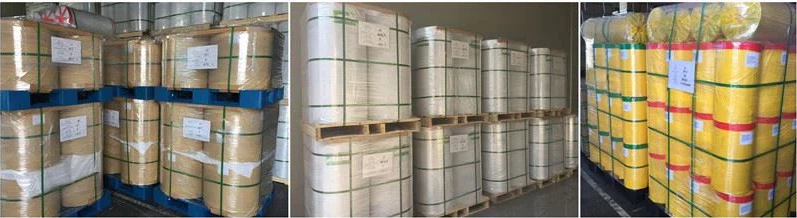
Quality Assurance – Light Block Consistency
In‑line spectrophotometer:
Every master roll passes through a dual‑beam UV‑vis scanner. We measure transmission at 365 nm (UVA), 450 nm (blue visible), and 650 nm (red visible).
Acceptance criteria:
A365 <1.5%
A450 <6%
A650 <6%
If any roll exceeds, it is rejected or downgraded to "industrial grade."
Pigment dispersion test:
We take cross‑sections of each batch and examine under microscope (400x). TiO₂ agglomerates >10 µm cause pinholes and uneven whiteness. Our specification: >95% of particles <5 µm.
WVTR verification for white film:
Pigment can sometimes create micro‑voids that increase moisture transmission. We test every batch on MOCON. If WVTR exceeds 2.5 g/m²·day, we recoat with additional PVDC.
Retain sample program:
We keep a 1 m² sample from each lot in a dark cabinet. You can request it for long‑term light stability correlation.

Factory & Manufacturing – White Grade Specifics
Dedicated white compounding line – No color cross‑contamination with clear or amber grades.
Titanium dioxide source – Rutile grade (not anatase), FDA‑listed, from a single supplier (Kronos or Chemours) for batch consistency.
PVDC coating on white substrate – White PVC has slightly higher surface energy; we adjust corona treatment to 48 dynes/cm for adhesion.
Cleanroom slitting – ISO 7. White films show dust easily; we use ionized air knives to remove particles before winding.
Certifications – ISO 15378 (pharma primary packaging), FDA 21 CFR 175.300 (PVC) and 177.1520 (PE sealant, if present).
Recent investment: A X‑ray fluorescence (XRF) line that measures TiO₂ concentration in real time. The control system adjusts feeder speed if whiteness drifts.

FAQ – Light‑Blocking White Film
Q1: Is the white pigment safe for direct drug contact?
A: Yes. Titanium dioxide (TiO₂) is listed in FDA 21 CFR 178.3297 (colorants for polymers). It does not migrate; particle size is >100 nm, no nanotoxicity concern. We provide a certificate of compliance with EU 10/2011 Annex I.
Q2: Can I see through the blister to check if a tablet is missing?
A: Not directly. However, the white background creates a silhouette – you see the shadow of the tablet against the white surface. For automated vision systems, we recommend backlighting. We have a white paper on vision system settings for white blisters.
Q3: Does white PVC/PVDC cost more than clear?
A: Approximately 12–18% higher due to TiO₂ and tighter QC. Much lower than amber PVC/PVDC (which uses expensive dyes) and far below foil.
Q4: How does it compare to amber film for UV protection?
A: Amber typically blocks UV (200–400 nm) but transmits 10–20% of visible light (400–700 nm). White blocks >95% of visible light as well. Some drugs degrade under visible light (e.g., riboflavin, methylene blue). Use white for complete protection.
Q5: Does the white film become brittle over time?
A: No – TiO₂ does not affect PVC flexibility. After 2 years of ambient storage, elongation remains >180%. Accelerated aging shows no embrittlement.
Q6: Can you print on the white side?
A: Yes. White is the outer layer (reverse print). We can print up to 8 colors with UV‑cured inks. The printed surface is then laminated to PVDC (or PVDC coated on the opposite side). Ask for our "print‑ready white" grade.
Hot Tags: Light-Blocking White PVC/PVDC Films, China, manufacturers, suppliers, factory, customized, custom, wholesale, low price, free sample, abrasion resistant film supplier, heat resistant film supplier, oil proof film supplier, pvc pvdc pe film for medical, stretch film supplier, waterproof plastic film


