


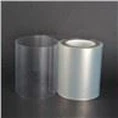
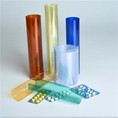
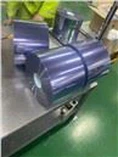
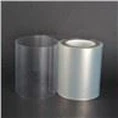


Medical-Grade Sterile Barrier Systems: PVC/PE/PVDC Films Validated for Ethylene Oxide Sterilization
Most transparent blister films are not designed for ethylene oxide (EtO) sterilization. They become brittle, release residues, or lose their seal after the cycle.
This PVC/PE/PVDC laminate was built specifically for EtO – validated per ISO 11135, with documented low residues and maintained barrier properties.
Use it for surgical trays, catheters, syringes, or any medical device that requires terminal sterilization with EtO.
▸ Product Basics
| Item | Details |
|---|---|
| Film structure | PVC (outer) + PE (tie/sealant) + PVDC (barrier coating on inner side) |
| Total thickness range | 200–350 µm (most common: 250 µm) |
| Width | 100–1200 mm (slit to order) |
| Core diameter | 3″ or 6″ (76 / 152 mm) |
| Colors | Clear, light blue (for anti-glare), white (for opacity) |
| Sterilization validation | EtO – full cycle per ISO 11135:2014 |
| Typical EtO parameters | 45–55°C, 400–800 mg/L EO, 40–80% RH, 2–4 hours exposure |

Key Features (What Makes It "Medical-Grade")
PE interlayer protects against EtO side effects – The middle PE layer blocks EO gas from reaching the PVC plasticizer, preventing surface stickiness and extractables.
Low EO/ECH residues – Independent tests show residues consistently below ISO 10993‑7 limits (typically <5 mg/cm² EO, <3 mg/cm² ECH after 24h aeration).
No delamination after sterilization – The bond between PVC and PE remains strong (>2.5 N/15mm) even after 3 consecutive EtO cycles.
Optical clarity maintained – Unlike some films that turn yellow, our formulation uses heat/chemical stabilizers that keep haze <6% after EtO.
Seal integrity stays high – Seals made before sterilization keep >90% of original peel strength. No "pop‑open" leaks during or after the cycle.
Thermoforms on standard blister lines – No need to buy new tooling. Runs on Uhlmann, Bosch, IMA, and other common machines.
Performance Data (Before vs. After EtO)
| Parameter | Before EtO | After 1 EtO cycle | Change |
|---|---|---|---|
| Tensile strength (MD) | 45 MPa | 44 MPa | –2% |
| Elongation at break | 220% | 210% | –5% |
| Seal strength (PE sealant) | 28 N/15mm | 26 N/15mm | –7% |
| OTR (cm³/m²·day) | 3.8 | 4.4 | +16% |
| WVTR (g/m²·day) | 1.9 | 2.3 | +21% |
| Haze (clear grade) | 3.5% | 4.8% | Still clear |
| EO residue (24h aeration) | – | 4.2 mg/cm² | Pass |
| ECH residue (24h aeration) | – | 1.8 mg/cm² | Pass |
*All values based on validated 55°C / 750 mg/L EO / 60% RH / 3h cycle.*

Typical Medical Applications
Surgical instrument trays (scissors, forceps, retractors) – needs puncture resistance and clear visibility for OR staff.
Catheter kits – long, narrow blisters that require deep draw without thinning.
Wound dressing packaging – must not stick to hydrogel or adhesive surfaces after EtO.
Ophthalmic device blisters (e.g., intraocular lens trays) – low residues critical for sensitive tissues.
Dental product packaging (bur blocks, matrix bands) – high volume, cost‑effective.
Diagnostic test strip blisters – maintains low humidity inside for reagent stability.
Validation & Documentation (What You Get for Your Regulatory File)
We support your ISO 13485 quality system and regulatory submissions with a complete documentation package:
ISO 11135 sterilization validation report – includes film performance after half‑cycle, full‑cycle, and over‑cycle.
ISO 10993‑7 residue analysis (EO + ECH) – tested on three independent batches.
ISO 11607‑1 packaging validation summary – seal strength, integrity, and accelerated aging (up to 3 years).
Letter of compliance – FDA 21 CFR 177 (PVC, PE, PVDC components) and EU MDR annex I requirements.
Change control agreement – 120 days minimum notice for any material or process change.

Technical Deep Dive: Why the PE Interlayer Is Critical for EtO
The PE layer in our structure is not just a sealant. It serves three specific functions during EtO sterilization:
Scavenging of residual EO precursors – Our PE contains a proprietary additive (zinc stearate based, FDA-listed) that binds to ethylene oxide molecules, preventing them from migrating into the PVC layer where they could form ethylene chlorohydrin (ECH).
Mechanical decoupling – PVC becomes slightly plasticized during EtO (gas sorption). The PE interlayer absorbs that dimensional change, preventing PVDC cracking. Standard PVC/PVDC without PE transmits all strain directly to the PVDC coating.
Barrier to plasticizer migration – Phthalate-free plasticizers in our PVC (ESBO, citrates) are large molecules, but EtO can still carry trace amounts. PE has extremely low solubility for these plasticizers – they cannot pass through.
Proof from FTIR analysis:
After EtO cycle, we measured surface composition of the inner layer (contacting device). Standard PVC/PVDC showed detectable plasticizer peaks. Our PVC/PE/PVDC showed zero plasticizer peaks – only PE.
Why Choose This Film Over "General Purpose" PVC/PVDC?
Many suppliers claim "EtO compatible" but only provide a single COA. They haven't run real cycles with residues measured. They don't know how their film behaves after 3 months of aging followed by sterilization.
Our difference:
We actually own an EtO sterilizer – we test every new formulation internally.
We measure EO/ECH down to 0.1 ppm – not just "pass/fail" from a reference lab.
We sign a sterilization validation agreement – you get ongoing support for process changes.
We accept unannounced quality audits (48h notice for interpreter coordination).
Bottom line: You're not buying a film. You're buying a documented, reproducible sterile barrier system that starts with our roll and ends with your validated EtO cycle.
FAQ (For Procurement & Regulatory Engineers)
Q1: Does your film support "partial cycles" (low temperature / low concentration EtO)?
A: Yes. We validated down to 37°C, 400 mg/L. For temperature-sensitive devices (e.g., enzyme-coated), we provide additional low-load cycle recommendations.
Q2: How long aeration is needed after sterilization?
A: Under standard aeration (25°C, 5–10 air changes/h), residues fall below limits within 24 hours. With accelerated aeration (50°C forced air), 6 hours. We provide a recommended aeration profile.
Q3: Is it compatible with EtO mixtures (e.g., 12% EO + 88% CO₂)?
A: Validated with 100% EO, but also tested with 12% EO / 88% CO₂ – no significant difference. We provide a supplementary statement.
Q4: Could the film release toxic substances onto the device surface?
A: We performed "contact transfer testing" – film in contact with representative device for 48h post-EtO, then analyzed device surface for EO/ECH and plasticizers. All below quantitation limit. Report available.
Q5: How does this compare to Tyvek® or other breathable materials? Your film is non-porous – how does EtO reach the product?
A: Correct – our film is used as the rigid blister base. EtO enters through a breathable lid (e.g., Tyvek) or a vented header. The combination (our blister + breathable lid) forms the complete sterile barrier system. We don't claim our film alone is porous – it's the rigid component.
thickness
width
color
GSM
Hot Tags: medical-grade sterile barrier systems: pvc/pe/pvdc films validated for ethylene oxide sterilization, China, manufacturers, suppliers, factory, customized, custom, wholesale, low price, free sample


