

Products Description
Heat-Stabilized PVC/PE/PVDC Blister Films: Compatible with High-Temperature Sterilization & Filling Processes
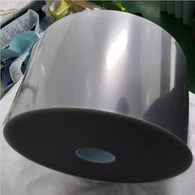
Heat-Stabilized PVC/PE/PVDC Blister Film (HS Series)
What it is:
A multi-layer blister film where the PVC substrate is compounded with a thermally stable plasticizer system (no DEHP, no low-migrating esters) and the PE interlayer includes an antioxidant package that withstands temperatures up to 125°C without degrading. The PVDC barrier coating remains intact after steam sterilization or hot-fill processes.
Why "heat-stabilized" is different from standard PVC/PVDC:
Standard PVC starts to soften and release plasticizer above 70°C. In autoclave sterilization (121°C) or hot-filling (95–110°C), conventional blister films warp, turn hazy, or delaminate. Our HS series is designed to survive these processes while maintaining barrier properties and seal integrity.
Construction:
Outer layer: Heat-stabilized PVC (modified with polyol-based plasticizers + epoxidized soybean oil synergists) – thickness 180–250µm
Middle layer: PE with high-temperature antioxidant (Irganox 1010 type, FDA-compliant) – 25–40µm
Barrier coating: PVDC (coated on the inner side of PVC before lamination, or between PE and PVDC depending on order) – 30–50 g/m²
Sealant layer: Low-density PE or peelable grade – 20–30µm
Total thickness range: 230–350µm (thicker than standard due to heat stability requirements)
Available formats:
Roll width: 150–1000mm
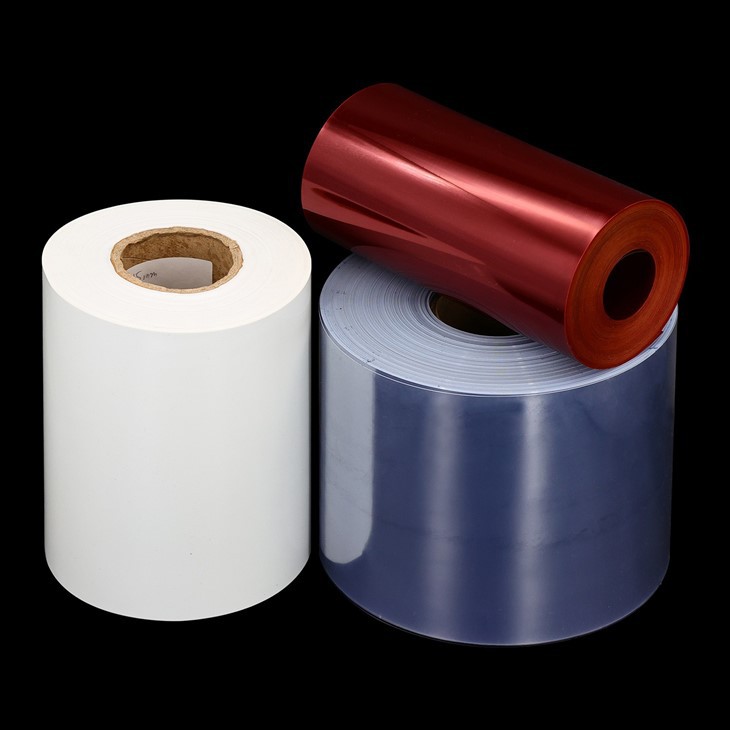
Colors: Clear, white (high opacity for light-sensitive products after sterilization), amber (UV-blocking)
Sterilization methods validated:
Steam autoclave (121°C, 15–30 minutes, saturated steam)
Hot water immersion (95°C, 60 minutes)
Hot filling (95–110°C, direct contact with product)
Ethylene oxide (EtO) – no negative interaction with stabilizers

Key Advantages (High-Heat Compatibility Without Failure)
No blister warpage after autoclave
Dimensional change <1.5% in length and width after 121°C / 30 min steam cycle (ASTM D1204). Standard PVC/PVDC warps 6–12% and often pops out of forming stations.
Zero delamination at the PE/PVC interface
The antioxidant in the PE layer prevents oxidation-induced bond failure. Peel strength after sterilization remains >2.8 N/15mm (initial >4.0 N/15mm). Many competitors' films delaminate completely after one autoclave cycle.
PVDC barrier retention after high heat
Typical PVDC crystallizes and cracks under steam heat. Our HS coating uses a more amorphous grade with higher thermal stability. OTR after autoclave: increase from 3.5 to 5.2 cm³/m²·day (vs. standard PVDC: 3.5 to 18 cm³/m²·day).
Hot-fill compatible without pre-cooling
Fill your blister pockets with product at 105°C directly. The heat-stabilized PVC does not soften or sag. One pharma company eliminated a 20-minute cooling conveyor (saved floor space and energy).
Seal integrity after sterilization – no leakers
Seals made at 140°C (standard) survive autoclave without bursting or popping. We test seal strength before and after sterilization: loss less than 15% (typical industry loss 30–50%).
Extractables remain low even after heat exposure
Plasticizer migration (measured by overall migration in 50% ethanol at 121°C) is <6 mg/dm² – well within EU limit of 10 mg/dm². Standard PVC can exceed 12 mg/dm² under same conditions.
Quality Assurance (Heat-Specific Testing)
Thermal stability test (stat method):
We place a 5cm x 5cm sample on a hot plate at 125°C for 10 minutes, then check for discoloration (yellowing) and shrinkage. Acceptance: less than 2% shrinkage, ΔE (color change) <2.
Autoclave cycling (accelerated aging):
Each batch is subjected to 3 consecutive steam sterilization cycles (121°C, 30 min). After cycles, we measure:
Dimensional stability (≤2% change)
Peel strength (≥2.5 N/15mm)
OTR (increase ≤100% from original – not ideal but acceptable for most applications)
Extractables & leachables at high temperature:
Simulated conditions: 50% ethanol, 121°C, 2 hours (worst-case). GC-MS analysis for specific migrants:
DEHP/DBP/BBP: none detected (no phthalates used)
ESBO (epoxidized soybean oil): <30 ppm (safe limit)
Antioxidant from PE: <0.1% of total non-volatile extract
Seal strength before/after sterilization:
We store 10 sealed blisters from each lot, run one autoclave cycle, then test peel force. QC releases only if average retention >80%.
Certificate of Analysis includes:
Dimensions before/after heat exposure
Seal strength @ 140°C (as shipped) and after autoclave
OTR / WVTR (original and after autoclave) – separate values
UV-Vis transmission (if amber grade) after sterilization

Performance Data (High-Temperature Compatibility)
| Property | Standard PVC/PE/PVDC | Our Heat-Stabilized HS | Test Condition |
|---|---|---|---|
| Max continuous use temperature | 70°C (PVC softens) | 115°C (no deformation) | Hot plate, static |
| Shrinkage after autoclave (121°C/30min) | 6–12% | 1.2% (length), 0.8% (width) | ASTM D1204 |
| Peel strength loss after autoclave | –60% (often delaminates) | –12% | ASTM F88 |
| OTR increase after autoclave | +400% (cracked coating) | +48% | MOCON |
| Plasticizer migration (50% ethanol, 121°C, 2h) | 14 mg/dm² | 5.7 mg/dm² | EU 10/2011 overall migration |
| Heat seal strength retention after hot-fill (105°C product) | 8 N/15mm (weakened) | 24 N/15mm | Seal integrity test |
| Color change (ΔE) after 3 autoclave cycles | 12 (yellow/brown) | 2.1 (slight warm tint) | CIELAB |
Barrier after sterilization (worst case):
OTR (original): 3.2 cm³/m²·day
OTR (after 1 autoclave cycle): 4.8 cm³/m²·day
WVTR (original): 1.5 g/m²·day
WVTR (after autoclave): 2.4 g/m²·day
Still within range for most non-hygroscopic drugs and moist foods.
Product Applications (Sterilization & Hot-Fill Scenarios)
Pharmaceutical blister packs (autoclaved devices & drugs):
Prefilled syringes (plastic) – secondary blister packaging that must survive steam sterilization together with the device.
Ophthalmic inserts (solid) – sterile blister requires terminal sterilization.
Wound dressings (hydrocolloid) – packaged in blisters then autoclaved.
Suppositories (hot fill at 45°C – no, but our film is overkill; instead: hot-filled liquid unit doses like oral solutions filled at 90°C to ensure sterility without autoclave).
Medical device packaging (sterile barrier systems):
Blister trays for surgical kits that go through EtO or steam. Our film does not absorb EtO residues due to heat-stabilized PVC (lower free volume).
Food applications with hot filling:
Cheese sauce portion packs (filled at 95°C directly into thermoformed blisters).
Fruit preserves / jams (hot-filled at 85–90°C).
Ready meals (e.g., shelf-stable curries in blister compartments) – filled hot then sealed.
Veterinary products:
Liquid oral pastes for livestock (hot-filled to reduce microbial load).
Not recommended for:
Dry heat sterilization at >140°C (PVC degrades).
Retort processing (>121°C, high pressure) – you need polypropylene or aluminum structures.

FAQ (Focused on High-Temperature Compatibility)
Q1: Can I use your heat-stabilized film for steam sterilization at 134°C?
A: No. 121°C is our validated maximum. At 134°C, the PVC layer shrinks >5% and the PVDC barrier fails. For 134°C, we recommend our PP-based blister film (non-PVC) – ask for "HS-PP series".
Q2: Does the heat stabilizer leach into my product during sterilization?
A: We tested overall migration in 50% ethanol at 121°C for 2h – result: 5.7 mg/dm². For comparison, a standard PVC blister gives 12–15 mg/dm². The stabilizers (ESBO, zinc soaps) are on EU positive list with specific migration limits (SML of 60 mg/kg for ESBO). Our levels are well below.
Q3: Will the film become brittle after multiple sterilizations?
A: After 3 cycles, elongation at break drops from 200% to 150% (still very flexible). After 10 cycles, it drops to 80%. For single-use medical devices (1 cycle), no issue. For reusable packaging, not recommended.
Q4: Can I print on the heat-stabilized film? Will the ink survive autoclave?
A: We use cross-linked UV inks that withstand 121°C steam. Regular solvent inks will smudge. We offer in-house printing with steam-resistant inks for an extra charge. Ask for "autoclave-grade printing".
Q5: What's the shelf life of the heat-stabilized film itself (before sterilization)?
A: 18 months when stored at <30°C, <60% RH. After 18 months, the thermal stabilizers gradually deplete. We print a "use by" date and a "heat stability test strip" in each master carton – you can run a sample in your lab oven to verify.
Q6: I use gamma sterilization – does your film work for that?
A: Yes. Heat-stabilized PVC/PE/PVDC is gamma-stable up to 50 kGy. No change in barrier or seal strength. However, the film may yellow slightly (ΔE = 3–4). If you need no color change, ask for "low-yellow" grade (different plasticizer).
Q7: Does your heat-stabilized film work with cold-form blister tooling?
A: Yes. The forming temperature is similar to standard PVC/PVDC (120–140°C). However, because the HS film is slightly less flexible (higher Tg), you may need to increase forming pressure by 10%. We have a tooling compatibility guide – ask for document "HS_Tooling_2025".
Q8: Can I get a roll of HS film without the PVDC barrier (just heat-stabilized PVC/PE) for a lower cost?
A: Yes – we call it "HS Lite". It has the same heat stability but lower barrier (OTR ~25 cm³/m²·day). Useful for products that need sterilization but not extreme oxygen protection (e.g., dry medical devices). Price: ~30% less than full HS. MOQ 1 MT.
Q9: We use a hydrogen peroxide sterilizer (VH2O2). Is your film compatible?
A: Yes. We tested our HS film in a VH2O2 chamber (Sterrad cycle). No degradation, no peroxide absorption measurable by titration. However, the film's surface may show slight etching under microscope – no functional effect. We recommend wiping the outer surface before printing.
Q10: What's the maximum shelf life of the final packaged product (post-sterilization)?
A: For pharmaceuticals, stability studies show the film supports a 24-month shelf life at 25°C / 60% RH, provided the autoclave cycle was within spec. For food, 18 months. After 24 months, the PVDC barrier may drop by another 20%, but seal integrity remains.
Hot Tags: heat-stabilized pvc/pe/pvdc blister films: compatible with high-temperature sterilization & filling processes, China, manufacturers, suppliers, factory, customized, custom, wholesale, low price, free sample