




Products Description
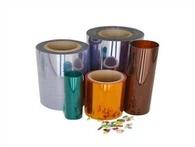
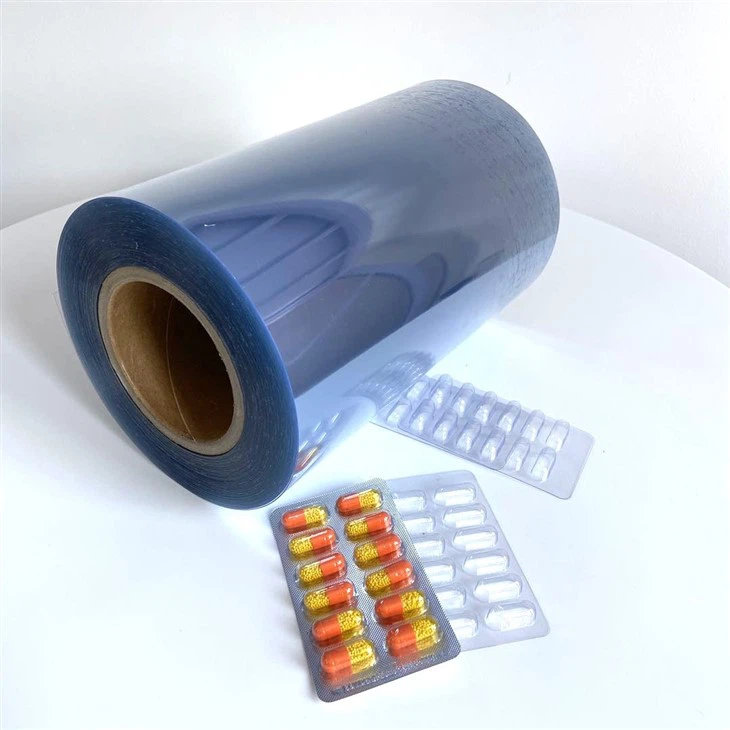
Ready-to-Use PVC/PVDC Roll Stock Film for High-Speed Automatic Blister Packaging Machinery
In today's competitive pharmaceutical manufacturing environment, speed is everything-but not at the expense of quality. High-speed automatic blister packaging machines, running at 300, 400, or even 500 cycles per minute, demand materials that can keep pace without compromise. Our Ready-to-Use PVC/PVDC Roll Stock Film is specifically engineered for these demanding production environments. It arrives at your facility precisely as it left our factory-dimensionally accurate, statically controlled, and immediately ready for your machine. No conditioning period. No trial-and-error parameter adjustments. No unexpected web breaks at 3:00 AM. Just consistent, predictable performance that allows your high-speed lines to run at their full designed capacity, shift after shift, day after day.
This is not film designed for laboratory-scale equipment and "adapted" for production. This is film born from the requirements of modern high-speed rotary and flat-plate blister machines, manufactured with the precision and consistency that automated production demands.
The "Ready-to-Use" Difference: What It Means for Your Production
| Feature | Standard Film | Our Ready-to-Use Film | Production Impact |
|---|---|---|---|
| Gauge Tolerance | ±10% or wider | ±5% across full width | Consistent heating, uniform cavity formation |
| Roll Winding Tension | Variable within roll | Precisely controlled, taper tension | No telescoping, consistent unwinding |
| Static Charge | Uncontrolled | < 2 kV (neutralized) | Reduced dust attraction, reliable feeding |
| Moisture Content | Variable | < 0.2% (controlled packaging) | Immediate use, no conditioning required |
| Coefficient of Friction | Batch-dependent | 0.25-0.35, certified per batch | Predictable web transport |
| Width Tolerance | ±2 mm | ±0.5 mm | No edge trimming needed |
| Core Quality | Variable | Precision-wound, crush-resistant cores | Smooth starts, no core damage |
Technical Specifications: Precision You Can Measure
| Parameter | Specification | Tolerance | Test Method | Why It Matters for High-Speed Lines |
|---|---|---|---|---|
| Total Thickness | 250 µm (200-300 µm options) | ±5% | ASTM D374 | Consistent thermal response across the web |
| Gauge Variation (MD) | < 3% | N/A | In-line measurement | Prevents tension fluctuations during unwinding |
| Gauge Variation (TD) | < 5% | N/A | In-line measurement | Uniform heating across width |
| Width | As specified (200-1300 mm) | ±0.5 mm | Measuring tape | Fits precisely in forming station guides |
| Roll Length | As specified | +1% / -0% | Counter | Predictable roll changes |
| Core Inside Diameter | 76 mm (3") or 152 mm (6") | ±1 mm | Caliper | Fits all standard unwind shafts |
| Core Quality | Heavy-wall, crush-resistant | N/A | Visual | Withstands high-torque braking |
| Splice Frequency | Zero (splice-free rolls up to 3000 m) | N/A | Production standard | No production interruptions |
| Static Charge | < 2 kV (neutralized) | ±0.5 kV | Electrostatic meter | No misfeeds, no dust attraction |
| Coefficient of Friction | 0.25-0.35 | ±0.03 | ASTM D1894 | Consistent web transport |
| WVTR (23°C, 90% RH) | ≤ 0.50 g/m²/24h | ≤ 0.55 max | ASTM F1249 | Barrier performance you can trust |
| OTR (23°C, 0% RH) | ≤ 5.5 cm³/m²/24h/atm | ≤ 6.0 max | ASTM D3985 | Oxygen protection for sensitive APIs |
| Seal Initiation Temperature | 135°C | ±5°C | Gradient bar | Predictable sealing across all cavities |

Engineered for High-Speed Performance: The Technical Details
1. Precision Gauge Control for Uniform Heating
High-speed thermoforming happens in fractions of a second. The film enters the heating station, reaches forming temperature, and is formed into cavities-all in less time than it takes to blink. In this environment, gauge uniformity is not optional; it is essential.
Why It Matters: If gauge varies across the web, thick areas require more heat to form, while thin areas may overheat and sag. The result is inconsistent cavity formation, webbing between cavities, and increased rejection rates.
Our Solution: Our film is produced on precision calenders with real-time gauge monitoring and feedback control. Thickness is maintained within ±5% across the entire web width and throughout the roll length. This uniformity ensures that every centimeter of film reaches forming temperature at the same time, producing identical cavities from the first to the last.
2. Optimized Coefficient of Friction for Reliable Web Transport
At 400 cycles per minute, the film is moving through your machine at speeds exceeding 30 meters per minute. It passes over rollers, through tension controls, and into the forming station. If the coefficient of friction is too high, the film drags and may stretch. If too low, it slips and loses registration.
Why It Matters: Inconsistent COF leads to registration errors, misfeeds, and web breaks-all causing production stoppages.
Our Solution: Our formulation includes precisely calibrated slip additives that maintain COF within the optimal range of 0.25-0.35. This narrow window is certified per batch, ensuring that the film behaves predictably on your machine regardless of when it was produced.
3. Static Control for Clean, Reliable Feeding
Static electricity is the enemy of high-speed packaging. It attracts dust that can contaminate products or interfere with sealing. It causes film to stick to machine components or to itself, leading to misfeeds. And it can create safety hazards for operators.
Why It Matters: A single static-induced misfeed on a high-speed line can create a cascade of jams, requiring minutes or even hours to clear.
Our Solution: Every roll passes through an ionization station during slitting, neutralizing surface charge to <2 kV. The film is then wound and packaged in static-dissipative materials that maintain this low-charge state. When you load our film on your machine, it feeds cleanly from the first meter to the last.
4. Splice-Free Rolls for Uninterrupted Production
Every splice in a film roll is a potential point of failure-and a guaranteed interruption when it arrives at the sealing station.
Why It Matters: A splice requires the line to stop for re-threading, costing 10-30 minutes of production time. On a high-speed line, that's thousands of lost blisters.
Our Solution: We produce splice-free rolls up to 3000 meters in length, depending on thickness and width. Our winding process maintains consistent tension throughout the roll, preventing the telescoping and edge damage that can force splices in lesser-quality films. One roll, one continuous web, one uninterrupted production run.
5. Controlled Winding Tension for Perfect Unwinding
How a film is wound is as important as how it is made. Inconsistent winding tension creates "telescoping" (layers sliding sideways), "blocking" (layers sticking together), and difficult unwinding.
Why It Matters: A roll that doesn't unwind smoothly will cause tension fluctuations, registration errors, and web breaks-all avoidable with proper winding.
Our Solution: Our rolls are wound using taper tension technology-starting with higher tension at the core and gradually reducing tension toward the outside. This creates a roll that unwinds smoothly from start to finish, with no telescoping and no edge damage. Each roll is inspected for winding quality before packaging.

Key Advantages for High-Speed Packaging Operations
1. Immediate Productivity: No Startup Delays
Time is money on a high-speed packaging line. Every minute spent adjusting parameters, clearing jams, or conditioning film is lost production.
Open the bag, load the roll, and run. No conditioning period. No trial cavities to adjust settings. No "warm-up" rolls.
Our pre-validated parameter recommendations get you to full production speed faster-often within the first few meters of film.
Consistent roll-to-roll performance means your optimized settings remain valid order after order.
2. Maximum Machine Utilization: Less Downtime
High-speed machines are expensive investments. They earn their keep only when they are running.
Splice-free rolls eliminate mid-run changeovers for web splicing.
Consistent winding prevents the telescoping and edge damage that cause unwinding issues.
Predictable COF and static control reduce misfeeds and web breaks.
Result: More running time, more blisters produced, more product to sell.
3. Reduced Scrap: Higher First-Pass Yield
Scrap on a high-speed line is expensive-not just the film itself, but the product inside and the production time lost.
Uniform gauge ensures consistent heating and forming across the entire web, reducing cavity-to-cavity variation.
Precise width matching prevents edge trim waste and registration-related rejects.
Predictable seal performance eliminates leakers and incomplete seals.
Result: First-pass yields consistently above 98% in properly maintained equipment.
Release Testing (Every Batch):
| Test | Method | Acceptance Criteria |
|---|---|---|
| Thickness Profile | ASTM D374 | Within specification across web |
| WVTR | ASTM F1249 | ≤ specified maximum |
| OTR | ASTM D3985 | ≤ specified maximum |
| Seal Strength | ASTM F88 | Within specified range |
| Coefficient of Friction | ASTM D1894 | 0.25-0.35 |
| Haze/Clarity | ASTM D1003 | ≤ 4.5% (clear grades) |
| Dimensional Accuracy | Measuring tape | Width, length, core as specified |
| Static Charge | Electrostatic meter | < 2 kV |
Certification Provided:
Certificate of Analysis with actual measured values
Certificate of Compliance with pharmacopoeial standards
Phthalates-Free Declaration
BSE/TSE Free Certificate
Food Contact Compliance (where applicable)
Packaging That Protects Until You're Ready to Run
Our "Ready-to-Use" commitment extends to how we package your film:
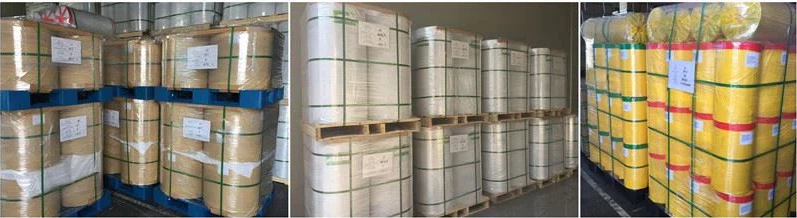
Primary Protection: Each roll is wrapped in a static-dissipative polyethylene film to maintain neutral charge.
Moisture Barrier: The wrapped roll is sealed inside a heavy-duty aluminum foil bag with vacuum draw and desiccant packets.
Moisture Indicator: A humidity indicator card shows at a glance whether the bag has maintained its integrity.
Physical Protection: The bagged roll is placed in a reinforced cardboard box or wooden crate, depending on weight.
Labeling: Each box is labeled with product code, batch number, net weight, dimensions, and handling instructions.
Documentation: Certificate of Analysis and handling instructions are included inside the box and available electronically.
Storage Recommendations (Unopened):
Temperature: 15-25°C
Relative Humidity: <60%
Orientation: Rolls stored horizontally on pallets or vertically on A-frames
Shelf Life: 24 months from date of manufacture

Extended Frequently Asked Questions (FAQ)
Q1: We run Uhlmann UPS machines at 400 cycles per minute. Will this film maintain registration at that speed?
A: Yes, absolutely. Our film has been extensively tested on Uhlmann UPS lines at speeds exceeding 400 cpm. The key factors for registration at high speed are consistent COF (0.25-0.35) and precise width tolerance (±0.5 mm). Our film delivers both. We can provide specific parameter recommendations for your machine model, including forming temperature profiles and tension settings that we have validated in customer installations. For your first order, we recommend a supervised trial run with our technical support available remotely or on-site to fine-tune settings for maximum speed.
Q2: Our current film requires a 24-hour conditioning period after opening to prevent bubbling during forming. Does yours?
A: No conditioning period is required. Our film is packaged with moisture content below 0.2% in hermetic aluminum foil bags with desiccant. As long as the bag remains sealed until you are ready to use the film, the moisture content remains at this level. You can open the bag, load the roll, and begin production immediately. This is one of the most frequently cited advantages by customers switching to our film-the ability to respond to production schedule changes without 24-hour advance planning.
Q3: How do you ensure that rolls don't telescope during shipping or on our unwind?
A: Telescope is prevented through three controls:
Precision Winding: Our taper tension winding program applies higher tension at the core and gradually reduces tension toward the outside, creating a roll with stable internal stress.
Edge Quality: Our slitting produces clean, burr-free edges that stack evenly without creating the ledges that lead to telescoping.
Vertical Orientation: We specify that rolls must be transported and stored vertically (on A-frames or standing on end) to prevent gravitational distortion. Our packaging is designed to accommodate vertical orientation, and our shipping instructions clearly communicate this requirement to carriers.
We have shipped millions of meters of film globally with a telescoping rate below 0.1%.
Q4: What is your maximum roll length, and how does it affect splicing?
A: Maximum roll length depends on thickness and width, but typical maximums are:
250µm film, up to 1300mm width: 2000-3000 meters
200µm film, up to 1300mm width: 2500-3500 meters
300µm film, up to 1300mm width: 1500-2000 meters
All rolls are splice-free up to these maximum lengths. This means no mid-roll splices to interrupt your production. When you change rolls, you change rolls-you don't stop in the middle for a splice. For customers with extremely high-volume production, we can coordinate deliveries so that roll changes align with scheduled maintenance breaks, virtually eliminating changeover downtime.
Q5: We use both rotary and flat-plate machines. Is this film suitable for both?
A: Yes. Our film's wide forming temperature range (115-150°C) accommodates both the rapid heating of rotary machines and the longer dwell times of flat-plate presses. The key difference is in the parameter recommendations:
Rotary Machines (Uhlmann UPS, IMA Blitz): Form at higher temperatures (140-150°C) with shorter contact time.
Flat-Plate Machines (Mediseal M Series, Romaco Promatic): Form at moderate temperatures (125-135°C) with longer heating time.
We provide separate parameter matrices for each machine type. If you use both, we recommend maintaining separate setup sheets for each line.
Hot Tags: ready-to-use pvc/pvdc roll stock film for high-speed automatic blister packaging machinery, China, manufacturers, suppliers, factory, customized, custom, wholesale, low price, free sample