

Products Description
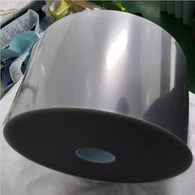
Multi-Layer PVC/PVDC Blister Film: Ideal for Hygroscopic and Light-Sensitive Drug Formulations
Product Overview: Engineered Protection for the World's Most Demanding Drug Formulations
Not all pharmaceutical products are created equal. Some actively seek out moisture from the air, degrading into ineffective compounds within weeks of exposure. Others undergo molecular rearrangement when exposed to even moderate light, losing potency or developing toxic byproducts. For these challenging formulations, standard blister films are simply not enough.
Our Multi-Layer PVC/PVDC Blister Film represents a fundamental advance in protective packaging architecture. Unlike conventional mono-layer or simple coated films, this product employs a precision-engineered multi-layer structure where each stratum serves a specific protective function. The result is a packaging material that provides exceptional defense against the two primary environmental threats to drug stability: moisture ingress and photodegradation. For hygroscopic APIs that demand single-digit relative humidity environments, and for light-sensitive molecules that require specific wavelength blocking, this film delivers uncompromising protection throughout the product's entire shelf life-regardless of where in the world that shelf life is spent.
The Multi-Layer Architecture: Form Follows Function
Our film is constructed through a sequential co-extrusion and lamination process that builds protection layer by layer:
| Layer | Function | Thickness | Key Properties |
|---|---|---|---|
| Outer Protective Layer | Abrasion resistance, optical clarity, print receptivity | 20-30µm | High gloss, scuff-resistant, corona-treated for ink adhesion |
| Light-Blocking Core | Selective wavelength filtration | 50-100µm | Proprietary pigment package, UV/VIS absorption tuned to API sensitivity |
| Structural PVC Layer | Mechanical integrity, formability | 120-180µm | Pharmaceutical-grade, non-phthalate stabilized, deep-draw capable |
| Adhesive Tie Layer | Interlayer bonding, optical transparency | 5-10µm | Food-contact approved, thermal stable, prevents delamination |
| PVDC Barrier Layer | Moisture and oxygen protection | 30-50 g/m² | High-density coating, pinhole-free application |
| Inner Seal Layer | Hermetic sealing compatibility | 10-15µm | Optimized for aluminum lidding, wide seal window |
This is not a random assembly of materials. Each layer is chemically and physically optimized for its specific role, and the interfaces between layers are engineered to prevent delamination during the extreme stresses of thermoforming and long-term aging.

Technical Specifications: Quantifiable Protection
| Parameter | Standard Grade | High-Barrier Grade | Ultra-Protective Grade | Test Method |
|---|---|---|---|---|
| Total Thickness | 250µm ± 5% | 275µm ± 5% | 300µm ± 5% | ASTM D374 |
| WVTR (23°C, 90% RH) | ≤ 0.45 g/m²/24h | ≤ 0.35 g/m²/24h | ≤ 0.28 g/m²/24h | ASTM F1249 |
| OTR (23°C, 0% RH) | ≤ 5.0 cm³/m²/24h/atm | ≤ 3.5 cm³/m²/24h/atm | ≤ 2.5 cm³/m²/24h/atm | ASTM D3985 |
| Light Transmission (UV 200-400nm) | < 2% | < 0.5% | < 0.1% | UV-VIS Spectrophotometry |
| Light Transmission (VIS 400-700nm) | > 85% (clear) or < 5% (opaque) | Customizable | Customizable | UV-VIS Spectrophotometry |
| Specific Wavelength Blocking | Full spectrum or targeted bands | Full spectrum or targeted bands | Full spectrum or targeted bands | Custom specification |
| Haze | ≤ 3.5% (clear variants) | N/A (opaque variants) | N/A (opaque variants) | ASTM D1003 |
| Seal Strength (Alu 20µm) | 12-18 N/15mm | 12-18 N/15mm | 14-20 N/15mm | ASTM F88 |
| Deep-Draw Ratio | 1:3 | 1:2.8 | 1:2.5 | Cavity measurement |
| Forming Temperature Range | 115-150°C | 120-155°C | 125-160°C | Thermal analysis |
The Science of Moisture Protection for Hygroscopic Drugs
Hygroscopic drug formulations-those that readily absorb atmospheric moisture-present one of packaging's greatest challenges. For these products, the difference between a stable 36-month shelf life and a failed stability study can be measured in single-digit percentage points of relative humidity within the blister cavity.

Why Choose Us?
Not Just a Supplier. A Strategic Partner in Pharmaceutical Packaging.
In the complex world of pharmaceutical packaging, the difference between a reliable partner and a mere vendor is measured in regulatory approvals, production uptime, and patient safety. When you choose to work with us, you are selecting a partner with deep technical expertise, unwavering quality commitment, and a genuine understanding of the challenges you face-from formulation development through global market access.
Here is why pharmaceutical manufacturers, CDMOs, and global health organizations choose us as their preferred partner for PVC/PVDC blister film solutions.
1. Pharmaceutical-Grade Focus, Not a Side Business
Many film suppliers treat pharmaceutical packaging as an afterthought-a niche application for their broader industrial portfolio. For us, it is our sole focus.
Dedicated Pharma Manufacturing: Our production lines are exclusively dedicated to pharmaceutical-grade films. No industrial films, no food packaging-just GMP-compliant materials for drug packaging.
ISO 15378 Certified: Our quality management system is certified specifically for primary packaging materials for medicinal products. This is not a generic ISO 9001 with a pharma "add-on"-it is a system designed from the ground up for pharmaceutical requirements.
Deep Regulatory Understanding: Our quality team includes former pharmaceutical industry professionals and regulatory affairs specialists who understand what inspectors look for and what your submission requires.
2. Technical Expertise That Solves Real Problems
We do not just sell film; we solve packaging challenges. Our technical team brings decades of combined experience in polymer science, blister line engineering, and formulation development.
Formulation-Specific Guidance: We help you select the right film for your specific API-whether it is hygroscopic, light-sensitive, oxygen-sensitive, or mechanically fragile.
Troubleshooting Support: When issues arise on your blister line-web breaks, sealing inconsistencies, forming defects-our engineers are available to diagnose and resolve them, often remotely within hours.
Validation Partnership: We do not just provide material and walk away. We support your validation efforts with documentation, parameter recommendations, and technical guidance throughout the IQ/OQ/PQ process.
Custom Formulation Development: For products with unique requirements, our R&D team works alongside yours to develop tailored solutions-from specific light-blocking profiles to enhanced barrier performance.
This is not "off-the-shelf" support. It is partnership-level engagement that reduces your risk and accelerates your timelines.
3. Uncompromising Quality Consistency
In pharmaceutical manufacturing, batch-to-batch consistency is not a preference-it is a regulatory requirement. Our quality systems are designed to deliver identical performance, every batch, every time.
Statistical Process Control: Critical parameters are monitored in real-time, with control limits that trigger intervention before specifications are approached.
Full Traceability: Every roll is traceable to raw material lots, production conditions, and quality test results. Genealogy records are maintained for 10 years.
Comprehensive Release Testing: Each batch undergoes full physical, barrier, and dimensional testing before release. Certificates of Analysis report actual measured values, not just "pass/fail" indications.
Stability-Minded Formulation: Our films are formulated for long-term stability, not just immediate performance. We test under accelerated and real-time conditions to ensure your product remains protected throughout its entire shelf life.

Our Multi-Layer Approach to Moisture Control:
Barrier Redundancy: The PVDC layer provides the primary moisture barrier, but the multi-layer structure adds secondary protection. If microscopic defects exist in one layer-and in any manufacturing process, they can-the adjacent layers provide backup protection, creating a "safety net" that single-layer films cannot offer.
Tortuous Path Effect: The interfaces between layers create minor discontinuities that moisture molecules must navigate. This "tortuous path" effectively increases the diffusion distance, slowing moisture ingress beyond what thickness alone would predict.
Moisture Scavenging Integration: For the most demanding applications, we can incorporate desiccant materials into an additional internal layer, actively absorbing any moisture that penetrates the primary barriers. This "active packaging" approach can maintain sub-10% RH inside the blister for years.
Seal Zone Integrity: Moisture ingress occurs primarily through the seal interface, not through the film itself. Our multi-layer construction ensures that the seal layer remains chemically pure and thermally stable, creating a consistent, defect-free seal that denies moisture its primary entry point.
The Science of Light Protection for Photosensitive Drugs
Light sensitivity is not a binary property-different drugs are sensitive to different wavelengths at different intensities. Effective light protection requires precision, not just opacity.
Understanding the Threat Spectrum:
UV-A (315-400nm): Penetrates deeply, causes oxidative damage, affects many antibiotics and cardiovascular drugs.
UV-B (280-315nm): High energy, causes direct photolysis, affects NSAIDs and some hormones.
Visible Light (400-700nm): Lower energy but high intensity, affects photosensitizers, certain vitamins, and biologics.
Specific Wavelengths: Some drugs have narrow absorption bands where even low-intensity light causes degradation.
Core Competitive Advantages
1. The Synergy Effect: 1+1 > 2 in Protective Performance
A mono-layer film loaded with both barrier polymers and light stabilizers represents a compromise-each additive interferes with the other's performance and with the film's mechanical properties. Our multi-layer architecture eliminates this compromise. The PVDC barrier layer can be optimized purely for moisture and oxygen protection. The light-blocking core can be formulated exclusively for wavelength control. The structural layer can focus on formability and strength. Each layer does one thing exceptionally well, and together they achieve protection levels that no single-layer film can match.
2. Customizable Protection Profiles
We recognize that every drug has a unique sensitivity profile. Our multi-layer platform allows us to tailor protection with surgical precision:
Moisture Sensitivity: Choose from three PVDC coating weights (standard, high, ultra) based on your API's hygroscopicity and target shelf life.
Light Sensitivity: Select wavelength blocking from 20+ standard pigment packages, or work with our color scientists to develop a custom formulation targeting your API's specific degradation spectrum.
Mechanical Requirements: Adjust core thickness and PVC molecular weight based on tablet size, cavity depth, and line speed requirements.
This is not a "one-size-fits-all" product-it's a customizable platform that adapts to your drug's specific needs.
3. Extended Shelf Life for Challenging Markets
For products destined for ICH Zone III (hot/dry) and Zone IV (hot/humid) markets, standard films often fall short. Our multi-layer construction has demonstrated:
24-month stability in Zone IV conditions (30°C/75% RH) for moderately hygroscopic drugs.
36-month stability in Zone II conditions (25°C/60% RH) for most drug types.
Successful registration in markets including Brazil, Thailand, Indonesia, and West Africa where competitor products failed stability requirements.
If your export strategy includes challenging climates, this film provides the margin of safety that standard films cannot.

Regulatory Strategy Support for Combination Approvals
When a drug's stability depends on its packaging-as it does for hygroscopic and light-sensitive formulations-the packaging becomes part of the drug application. We support your regulatory strategy with:
Detailed Characterization Data: Full physical, chemical, and barrier characterization of each layer, with batch-to-batch consistency data.
Extractables & Leachables Studies: Comprehensive E&L profiles for the complete multi-layer structure, using multiple solvents and analytical techniques.
Stability Data Packages: Long-term and accelerated stability data for the film itself, and for film in combination with standard lidding materials.
Modeling & Prediction Tools: Scientific rationales for stability projections, reducing the need for extended real-time studies.
DMF/CEP Support: Letters of Authorization referencing our Drug Master Files and Certificates of Suitability.
Extended Frequently Asked Questions (FAQ)
Q1: We currently use a standard white opaque PVC/PVDC film for our light-sensitive product. What advantage does your multi-layer film offer over this simpler solution?
A: This is an excellent question because white opaque films are indeed effective at blocking light. The advantages of our multi-layer approach are threefold:
First, targeted protection. White opaque films block all light through physical scattering-but they also hide the product completely. Our wavelength-selective variants block the harmful wavelengths (e.g., UV, blue) while maintaining partial transparency. This allows visual inspection and patient verification that are impossible with full opacity.
Second, additive efficiency. In a mono-layer film, high loadings of titanium dioxide (for opacity) can interfere with polymer properties, reducing formability and impact resistance. By concentrating the light-blocking pigments in a dedicated core layer, we achieve superior light protection with lower total additive loading, preserving mechanical performance.
Third, upgrade path. If your product requires additional moisture protection in the future, our multi-layer architecture allows us to increase PVDC coating weight without reformulating the entire film. With a mono-layer film, any change requires complete requalification.
For many products, white opaque film is sufficient. But for those requiring the combination of protection, inspectability, and future flexibility, our multi-layer approach offers distinct advantages.
Q2: How do you validate that the different layers won't delaminate during thermoforming or over the product's shelf life?
A: Delamination is a critical failure mode, and we address it through multiple validation steps:
During Development: We test interlayer adhesion using ASTM F904 (peel strength of laminates) at three stages: raw film, post-thermoforming (worst-case stretched areas), and post-aging (accelerated and real-time). Minimum acceptable peel strength is 2.5 N/15mm, with typical values of 4-6 N/15mm.
During Production: Every batch undergoes in-process adhesion testing. Any trend toward reduced adhesion triggers immediate investigation and corrective action.
Long-Term Validation: We maintain real-time stability studies extending to 36 months, with interlayer adhesion tested at 6-month intervals. Data consistently shows no measurable delamination over time.
For Your Validation: We provide you with our full interlayer adhesion data package and can supply samples for your own testing under your specific forming conditions. The multi-layer structure is designed to withstand the biaxial stretching of thermoforming without layer separation-the tie layer is elastomeric and stretches with the structural layers.
Q3: Our product is extremely hygroscopic-it requires storage at <20% RH. Can your film maintain this environment for 24 months?
A: This is a demanding requirement, but achievable with our Ultra-Protective Grade combined with appropriate system design. Here's what we can provide:
Film Performance: Our Ultra-Protective Grade achieves WVTR ≤ 0.28 g/m²/24h. In a typical 10mm diameter blister cavity, this translates to an internal RH increase of approximately 1-2% per year under controlled external conditions (25°C/60% RH).
System Approach: To achieve <20% RH for 24 months, we recommend:
Our Ultra-Protective Grade film
High-barrier aluminum lidding (20-25µm hard temper)
Desiccant canister in secondary packaging (for extreme assurance)
Nitrogen flushing during sealing (optional)
Hot Tags: multi-layer pvc/pvdc blister film: ideal for hygroscopic and light-sensitive drug formulations, China, manufacturers, suppliers, factory, customized, custom, wholesale, low price, free sample, calendaring film, embossed film, moisture proof film, multi layer film, multi layer plastic film, tubular film