Products Description
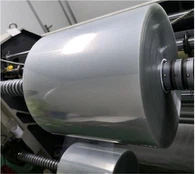
Medical Grade PVC PVDC Laminated Film for Tablet Capsule Packaging
Engineered for Compliance, Precision, and Patient Safety
In pharmaceutical manufacturing, the primary packaging is the final and most critical guardian of product integrity. Our Medical Grade PVC PVDC Laminated Film for Tablet Capsule Packaging is engineered from the ground up to meet the exacting standards of modern drug production. This is not a repurposed industrial film; it is a purpose-built material system designed for secure tablet and capsule encapsulation. It delivers a robust, reliable barrier within a GMP-controlled supply chain, providing the assurance that sensitive active pharmaceutical ingredients (APIs) are protected from environmental threats until the moment of patient administration. We provide more than film; we deliver a validated component for your quality system.
Composition & Controlled Manufacturing
Layer-By-Layer Assurance: The film is a precise co-extruded and laminated structure. A core layer of pharmaceutical-grade, high-purity PVC provides the primary form and stiffness. This is seamlessly laminated to a dedicated PVDC copolymer barrier layer under controlled atmospheric conditions to prevent pinholing and delamination risks.
GMP-Centric Production: Manufactured exclusively in a dedicated cleanroom environment certified to ISO 14644-1 Class 8 standards. Our production process is governed by a Pharmaceutical Quality System (PQS) aligned with ICH Q10 principles, ensuring procedural control, change management, and continuous monitoring.
Raw Material Pedigree: All polymers, plasticizers, and stabilizers are sourced from approved suppliers with Drug Master Files (DMFs) or equivalent regulatory documentation. We employ only non-phthalate, fully compliant additive systems suitable for global pharmaceutical registrations.
Performance Specifications & Quality Release Data for Medical Grade PVC PVDC Laminated Film for Tablet Capsule Packaging
Barrier Profile (Certified per Batch):
Water Vapor Transmission Rate (WVTR): ≤ 0.50 g/(m²·24h) at 23°C ± 1°C / 85% ± 3% RH. Tested per ASTM F1249.
Oxygen Transmission Rate (OTR): ≤ 5.5 cm³/(m²·24h·atm) at 23°C ± 1°C / 0% ± 2% RH. Tested per ASTM D3985.
Physical & Mechanical Properties:
Thickness Tolerance: ± 5% across the entire web width, ensuring consistent cavity volume and seal performance.
Tensile Strength & Elongation: Meets or exceeds the mechanical requirements outlined in USP <671> for single-unit containers, ensuring durability through packaging, distribution, and patient use.
Thermoforming Performance: Exhibits uniform and predictable sag behavior, allowing for the creation of deep, well-defined cavities without webbing or thin spots that could compromise barrier integrity.
Critical Quality Attributes (CQA):
Biological Reactivity: Passes USP <87> & <88> (Class VI) biological safety tests.
Heavy Metals: Compliant with ICH Q3D (Option 1) elemental impurity thresholds for oral dosage forms.
Non-Volatile Residue & Extractables: Comprehensive data available from controlled extraction studies using relevant solvents (e.g., water, ethanol, hexane) to support your regulatory submission and risk assessment.


Strategic Value Proposition for Pharmaceutical Manufacturers
Designed for Regulatory Submission: We provide a comprehensive Regulatory Support Package (RSP) with each product code. This includes a detailed Component Master File (CMF) excerpt, a Certificate of Suitability (CEP) statement, full analytical testing reports, and a Declaration of Compliance, drastically simplifying your packaging component documentation for FDA, EMA, and other agency filings.
Mitigates Supply Chain Quality Risk: Our vertically integrated control over the lamination process-as opposed to outsourcing the coating-eliminates a critical supply variable. This ensures absolute traceability and guarantees the adhesive interlayer is pharma-grade, removing a potential source of leachable compounds and lot-to-lot variability.
Optimized for High-Speed, Automated Lines: The film's consistent gauge and low static generation minimize misfeeds and web breaks on state-of-the-art blister lines (e.g., Uhlmann, IMA, Mediseal). This enhances Overall Equipment Effectiveness (OEE), reduces operational waste, and supports lean manufacturing objectives in high-volume production suites.
Facilitates Robust Primary Packaging Validation: The film's batch-to-batch consistency provides a stable foundation for your seal validation (peel and burst testing), blister integrity testing (e.g., dye penetration, vacuum decay), and shelf-life stability studies. We offer technical consultation on ASTM and ISO test method integration.
Security & Anti-Counterfeiting Enabler: The pristine, uniform surface is ideal for advanced marking technologies. It reliably accepts high-resolution serialization codes (2D Data Matrix, QR), covert security inks, and tamper-evident pattern printing without smudging or degradation, supporting global track-and-trace mandates.
Technical Collaboration Model: Engage with our Pharmaceutical Applications Team-comprised of packaging scientists and former quality professionals. We partner on feasibility studies, trouble-shoot niche forming challenges for irregularly shaped tablets (e.g., oval, capsule-shaped), and assist in designing controlled comparative studies versus your incumbent material.
Medical Grade PVC PVDC Laminated Film for Tablet Capsule Packaging Intended Use & Application Scope
Primary Packaging for Solid Oral Dosages: Tablets (coated, uncoated, layered), hard-shell and softgel capsules.
Clinical Trial Material (CTM) Packaging: Where material qualification and documentation rigor are paramount.
High-Potency API (HPAPI) Containment: Provides a reliable primary barrier as part of a engineered containment strategy.
Global Market Products: Suited for products destined for regulated markets with stringent packaging requirements (USA, EU, Japan, Canada, Australia).

Intended Use & Application Scope
Primary Packaging for Solid Oral Dosages: Tablets (coated, uncoated, layered), hard-shell and softgel capsules.
Clinical Trial Material (CTM) Packaging: Where material qualification and documentation rigor are paramount.
High-Potency API (HPAPI) Containment: Provides a reliable primary barrier as part of a engineered containment strategy.
Global Market Products: Suited for products destined for regulated markets with stringent packaging requirements (USA, EU, Japan, Canada, Australia).
Initiate a Qualifying Partnership
Transitioning to a true medical-grade film is a strategic quality decision. Let us provide the evidence and support you need.
To proceed, we recommend the following action path:
Stage 1: Documentation & Sample Review. Submit a request for our Technical Dossier and Regulatory Summary. We will provide a sample roll for your initial evaluation.
Stage 2: Feasibility & Machine Trial. Conduct a short machine trial with our technical support on call to establish baseline parameters.
Stage 3: Quality Agreement & Qualification. Collaborate on a Quality Agreement and execute a formal qualification protocol (IQ/OQ/PQ support).
Innovations in Material Science for Enhanced Stability
Recent advances in polymer stabilization have been integrated into our Medical-Grade PVC/PVDC Laminated Film to address evolving pharmaceutical challenges. A key development is the incorporation of a next-generation, high-molecular-weight thermal stabilizer system. This system not only provides exceptional processing stability during high-temperature forming but also actively scavenges trace acidic byproducts that can theoretically form from API excipients over extended periods. This creates a more chemically inert microenvironment within the blister cavity, offering an added layer of protection for drugs with alkaline-sensitive or acid-labile components. This proprietary stabilization is documented in our material safety data and contributes to the film's exceptional performance in long-term real-time aging studies.
Supply Chain Integration for Just-in-Time (JIT) Manufacturing
Understanding the production rhythms of modern pharma, we offer a Dedicated Inventory Program (DIP) for high-volume partners. Under this program, a defined volume of your qualified film lot is held in reserve at our climate-controlled logistics hub. This allows for rapid, "call-off" deliveries aligned with your production schedule, reducing your on-site inventory costs and warehouse footprint. Each reserved batch is quarantined and released with a full Certificate of Analysis (CoA) just prior to shipment, ensuring the material meets all specifications upon arrival at your facility, typically within 72 hours of order confirmation.
Performance in Challenging Climatic Zones
Beyond standard stability testing, we have conducted targeted studies simulating distribution and storage in Zones III and IV (hot/humid and hot/dry, per ICH Q1F). The film's laminated structure demonstrates remarkable resistance to plasticizer migration and barrier-layer stress-cracking under prolonged 40°C/75% RH conditions. This makes it particularly suitable for products destined for markets in Southeast Asia, the Middle East, and Latin America, where it maintains seal integrity and barrier properties far beyond the thresholds required for standard temperate climate distribution.
Frequently Asked Questions (FAQ)
Q1: Our product is a novel combination drug-device product (e.g., an inhaler with a blister-packed cartridge). Does your film have the necessary compatibility data for such integrated systems?
A: Yes, this is an increasingly common scenario. Beyond standard pharmaceutical compliance, we have generated specific data packages for combination products. This includes testing for interactions with common polymers used in devices (like polycarbonate or polypropylene) and assessing the film's performance when subjected to the specific sterilization methods (e.g., gamma irradiation, ETO) often required for the device component. We can provide a Combination Product Suitability Profile that outlines available data and can collaborate on generating product-specific compatibility evidence.
Q2: We occasionally see "gel" or "fish-eye" imperfections in other films during thermoforming. How does your lamination process prevent this?
A: "Gels" are often caused by undispersed high-molecular-weight polymer particles or contaminants. Our stringent raw material filtration (using multi-stage, fine-mesh screen packs) and controlled, low-shear extrusion process for the PVC core layer virtually eliminate this issue. For the PVDC lamination, we use a proprietary solution-casting method that ensures perfect dissolution and application, preventing the "orange peel" or fisheye effect common in some emulsion-coated films. Every production roll undergoes a automated optical inspection for such surface defects.
Q3: For clinical trial batches, we require very small roll quantities. Can you supply short runs without compromising quality or incurring prohibitive costs?
A: Absolutely. We operate a Clinical & Pilot Production Line specifically for this purpose. It maintains the same GMP standards and material specifications as our main lines but is optimized for short runs (as low as 50-100 kg). This allows you to obtain fully qualified, production-representative material for your Phase I-III clinical batches and stability studies without the cost burden of a full commercial production order.
Q4: What is your protocol for handling and investigating a customer's out-of-specification (OOS) result that may be linked to the film?
A: We have a formal, rapid-response OOS Investigation Protocol. Upon notification, we immediately quarantine the suspect batch and any adjacent lots. Our quality team will request your full test data and conditions. We then perform parallel testing on retained samples from the same batch at our lab. Within 10 business days, we provide a preliminary investigation report detailing our findings, which often includes cross-referencing with our in-process control data (e.g., infrared spectroscopy of the PVDC coating thickness, melt flow indices). Our goal is a root-cause analysis, not just a rebuttal.
Q5: We are designing a child-resistant, senior-friendly (CR/SF) blister package. How does the film perform with complex, multi-layered lidding structures required for such features?
A: Our film is an excellent substrate for advanced CR/SF lidding. Its consistent gauge and surface energy ensure uniform adhesion with the complex seal layers (e.g., push-through foils, peelable membranes) used in these structures. We work closely with several leading lidding foil manufacturers and have optimized our film's sealant layer to create a strong, yet precisely controllable, bond strength. We can provide you with peel-force data and guidance on achieving the target "push-through" or "peel" force required for compliance with standards like ASTM F3401 or ISO 8317.
Hot Tags: Medical Grade PVC PVDC Laminated Film for Tablet Capsule Packaging, China, manufacturers, suppliers, factory, customized, custom, wholesale, low price, free sample, extrusion coated film, coextruded film, non adhesive plastic film, packaging film, matte film, biodegradable plastic film