


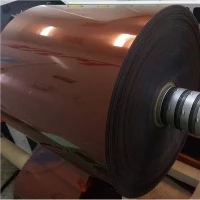

Industrial PVC film is a versatile and widely used material in various industries, thanks to its excellent properties and cost - effectiveness. One of the key aspects that users often inquire about is its hardness. As an industrial PVC film supplier, I am well - versed in the intricacies of this material and would like to share in - depth knowledge about the hardness of industrial PVC film.
Understanding the Concept of Hardness in Industrial PVC Film
Hardness in industrial PVC film refers to its resistance to indentation, scratching, and deformation. It is a crucial property that determines the film's durability, wear - resistance, and suitability for different applications. The hardness of PVC film is typically measured using standardized tests, with the Shore durometer scale being the most commonly used method.
The Shore durometer scale has two main types relevant to PVC film: Shore A and Shore D. Shore A is used for softer materials, while Shore D is for harder ones. Industrial PVC films can range from relatively soft (low Shore A values) to quite hard (higher Shore D values). For example, a PVC film with a Shore A hardness of around 70 - 80 is considered moderately soft, which might be suitable for applications where flexibility and conformability are required. On the other hand, a PVC film with a Shore D hardness of 60 - 70 is much harder and more rigid, appropriate for applications that demand high - strength and dimensional stability.
Factors Affecting the Hardness of Industrial PVC Film
Plasticizers
Plasticizers are one of the most significant factors influencing the hardness of PVC film. These are substances added to PVC to increase its flexibility and reduce its hardness. When a large amount of plasticizer is added to PVC resin, the resulting film will be softer. For instance, in the production of PVC film for packaging applications, a relatively high amount of plasticizer is used to make the film pliable and easy to wrap around products. Conversely, when less plasticizer is used, the film becomes harder. Our company offers a range of PVC films with different plasticizer contents to meet the varying hardness requirements of our customers.
Polymer Composition
The type and molecular weight of the PVC polymer itself play a role in determining the film's hardness. Higher - molecular - weight PVC polymers generally result in harder films. This is because the long polymer chains are more entangled, providing greater resistance to deformation. Different grades of PVC resin can be selected during the manufacturing process to achieve the desired hardness. For example, in the production of PVC Plastic Sheet for Window, a high - molecular - weight PVC resin might be used to ensure the sheet has sufficient hardness to withstand environmental stresses.
Additives
Other additives such as fillers, stabilizers, and impact modifiers can also affect the hardness of industrial PVC film. Fillers, like calcium carbonate, can increase the hardness and stiffness of the film. They act as reinforcing agents, reducing the ability of the polymer chains to move and deform. Stabilizers, on the other hand, help maintain the physical properties of the film over time, including its hardness. Impact modifiers are used to improve the film's toughness, which can also have an indirect effect on its apparent hardness, especially in applications where the film may be subject to mechanical impacts.

Applications Based on Hardness
Soft PVC Films
Soft PVC films, with lower hardness values on the Shore A scale, are commonly used in applications where flexibility and comfort are essential. For example, in the medical industry, soft PVC films are used for making blood bags and IV tubing. The softness of the film allows it to conform to the shape of the body and provides a gentle touch. In the packaging industry, soft PVC films are used for wrapping food products, as they can easily adapt to the shape of the items being packaged. Our PVC Film for Printing can also be available in a softer grade, which is ideal for applications where the film needs to be wrapped around curved surfaces during the printing process.
Hard PVC Films
Hard PVC films, with higher hardness values on the Shore D scale, are suitable for applications that require high strength and dimensional stability. In the construction industry, hard PVC films are used for window profiles, roofing membranes, and wall cladding. The hardness of the film ensures that it can withstand weathering, UV radiation, and mechanical stresses. Our Cooling Tower Grade PVC Sheet is a prime example of a hard PVC product. It needs to be hard enough to resist the harsh chemical environment and mechanical forces within a cooling tower.

Measuring and Controlling the Hardness of Industrial PVC Film
To ensure the quality and consistency of our industrial PVC films, we use advanced testing equipment to measure the hardness. Our quality control team conducts regular Shore durometer tests on samples from each production batch. This allows us to verify that the film meets the specified hardness requirements.
During the manufacturing process, we have strict control over the factors that affect hardness. The amount of plasticizer added is carefully measured, and the polymer composition is precisely formulated. By closely monitoring these variables, we can produce PVC films with a high degree of hardness accuracy. We also have the ability to customize the hardness of our PVC films according to the specific needs of our customers. Whether a customer requires a very soft film for a special packaging application or a hard film for an industrial construction project, we can adjust our production process accordingly.
Importance of Hardness in Industrial PVC Film for Customers
For our customers, understanding the hardness of industrial PVC film is crucial for making the right product selection. If a customer needs a film for a flexible application but chooses a film that is too hard, it may not perform as expected. The film may crack or break when bent, leading to product failure. On the other hand, if a customer selects a film that is too soft for a high - stress application, it may deform or wear out quickly.
By providing detailed information about the hardness of our PVC films, we help our customers make informed decisions. We also offer technical support to assist customers in choosing the most suitable film for their specific applications. Our goal is to ensure that our customers get the best - performing PVC film that meets their requirements and provides long - term value.
Conclusion
In conclusion, the hardness of industrial PVC film is a complex yet important property that is influenced by multiple factors such as plasticizers, polymer composition, and additives. It plays a vital role in determining the film's suitability for different applications, from soft and flexible uses like medical packaging to hard and rigid applications like construction materials.
As an industrial PVC film supplier, we are committed to providing high - quality PVC films with precise control over hardness. Our products, including PVC Plastic Sheet for Window, PVC Film for Printing, and Cooling Tower Grade PVC Sheet, are designed to meet the diverse needs of our customers.

If you are interested in our industrial PVC films and would like to discuss your specific requirements, we invite you to contact us for procurement and negotiation. Our team of experts is ready to assist you in finding the perfect PVC film solution for your business.

References
- ASTM D2240 - 15: Standard Test Method for Rubber Property - Durometer Hardness.
- "Handbook of PVC Formulating" by Edward J. Wickson.
- Technical literature on PVC materials from major chemical manufacturers.