


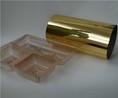


Hey there! I'm a supplier of PVC Film Red, and today I wanna chat about one of the most common questions I get: Is PVC Film Red resistant to chemicals?
First off, let's understand what PVC Film Red is. PVC, or polyvinyl chloride, is a widely used plastic material known for its versatility. Our PVC Film Red is not only vibrant in color but also has a range of applications, from packaging to decoration.
Now, when it comes to chemical resistance, it's not a one - size - fits - all answer. PVC in general has some level of chemical resistance, but it really depends on the specific chemicals it's exposed to.
Resistance to Common Chemicals
Water and Dilute Acids
PVC Film Red is pretty resistant to water. It can withstand being in contact with water for extended periods without significant degradation. This makes it suitable for applications where moisture might be present, like in some food packaging or outdoor signage.


As for dilute acids, PVC Film Red can handle them to a certain extent. For example, acetic acid, which is found in vinegar, won't cause immediate damage to the film. However, if the acid is concentrated or the exposure time is long, it can start to affect the film's integrity.
Alcohols
Most alcohols have a limited impact on PVC Film Red. Ethanol, the type of alcohol found in alcoholic beverages, won't dissolve or severely damage the film. But some stronger or more specialized alcohols might have a different effect. For instance, methanol can be more aggressive and may cause the film to swell or lose some of its physical properties over time.
Oils and Greases
When it comes to oils and greases, PVC Film Red has a mixed performance. Mineral oils, like those used in some industrial lubricants, can cause the film to soften and lose its shape. On the other hand, vegetable oils might have a less severe impact, but long - term exposure can still lead to some changes in the film's appearance and mechanical properties.
Factors Affecting Chemical Resistance
Film Thickness
The thickness of the PVC Film Red plays a crucial role in its chemical resistance. A thicker film generally offers better protection against chemicals. It takes longer for chemicals to penetrate through a thicker layer, giving the film more time to withstand the exposure. For applications where high - level chemical resistance is required, we often recommend using a thicker gauge of our PVC Film Red.
Additives
The additives used in the production of PVC Film Red can also affect its chemical resistance. Some additives are specifically designed to enhance the film's resistance to certain chemicals. For example, stabilizers can help prevent the film from degrading when exposed to heat and light, which can also indirectly improve its chemical resistance.
Temperature
Temperature has a significant impact on how PVC Film Red reacts to chemicals. At higher temperatures, chemicals can penetrate the film more easily, and the film's molecular structure becomes more susceptible to damage. So, if you're using the film in an environment with high temperatures and chemical exposure, you need to be extra cautious.
Applications Based on Chemical Resistance
Packaging
In the packaging industry, the chemical resistance of PVC Film Red is a major consideration. For food packaging, it needs to resist the chemicals present in the food, such as acids in fruits or oils in fried foods. Our PVC Film Red is a great choice for packaging products that don't have extremely aggressive chemical components.
For pharmaceutical packaging, we also have an amber color PVC Film For Medicine Packaging. This film is designed to protect the medicine from light and also has good chemical resistance to the substances in the medicine.
Industrial Use
In industrial settings, PVC Film Red can be used for lining tanks or covering equipment. It can provide a protective barrier against some chemicals used in manufacturing processes. However, it's important to carefully assess the specific chemicals involved and choose the right thickness and type of film.
Comparing with Other Colors of PVC Film
We also offer PVC Film Orange. In terms of chemical resistance, the basic properties of PVC remain the same across different colors. However, the pigments used to create the different colors might have a slight impact on the film's overall chemical resistance. But in most cases, the difference is negligible, and the choice between colors usually comes down to aesthetic or application - specific requirements.
Testing Chemical Resistance
We conduct a series of tests to ensure the chemical resistance of our PVC Film Red. We expose samples of the film to different chemicals under controlled conditions and monitor the changes in its appearance, physical properties, and chemical composition. This helps us provide accurate information to our customers about the film's performance in different chemical environments.
Conclusion
So, is PVC Film Red resistant to chemicals? Well, it depends. It has a certain level of resistance to many common chemicals, but its performance can be affected by factors like the type of chemical, film thickness, additives, and temperature.
If you're in the market for PVC Film Red or any of our other PVC films, and you have specific chemical - resistance requirements for your application, don't hesitate to reach out. We're here to help you choose the right product and ensure it meets your needs. Whether it's for packaging, industrial use, or something else, we've got you covered. Let's start a conversation about your project and see how our PVC films can work for you.
References
- "Handbook of PVC Formulating" by Edward J. Wickson
- "Plastics in Packaging" by Andrew R. Giles