


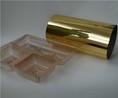


In the realm of packaging and construction materials, Flocked PS Sheet has emerged as a versatile and popular choice. Its soft, velvety surface not only provides an aesthetically pleasing appearance but also offers certain functional benefits. However, one area where there is often room for improvement is its thermal insulation properties. As a leading supplier of Flocked PS Sheet, I understand the importance of enhancing its thermal insulation to meet the diverse needs of our customers. In this blog, I will share some effective strategies on how to enhance the thermal insulation of Flocked PS Sheet.
Understanding the Basics of Thermal Insulation
Before delving into the methods of enhancing thermal insulation, it is crucial to understand the basic principles of how heat transfer occurs. There are three main modes of heat transfer: conduction, convection, and radiation.
Conduction is the transfer of heat through a material by direct contact. In the case of Flocked PS Sheet, heat can be conducted through the polystyrene substrate and the flocking fibers. Convection involves the transfer of heat through the movement of fluids (liquids or gases). If there are air gaps or spaces within the Flocked PS Sheet, convection currents can form and facilitate heat transfer. Radiation is the transfer of heat through electromagnetic waves, which can occur even in a vacuum.
To enhance the thermal insulation of Flocked PS Sheet, we need to address these three modes of heat transfer and find ways to reduce their effects.
Selecting the Right Polystyrene Substrate
The choice of polystyrene substrate plays a significant role in determining the thermal insulation properties of Flocked PS Sheet. Expanded polystyrene (EPS) and extruded polystyrene (XPS) are two common types of polystyrene used in the production of Flocked PS Sheet.


EPS is a lightweight, porous material with a high insulation value. It consists of small beads of polystyrene that are fused together during the manufacturing process. The air trapped within the beads acts as an insulator, reducing heat conduction. EPS is also relatively inexpensive and easy to process, making it a popular choice for many applications.
XPS, on the other hand, is a more dense and rigid material. It has a closed-cell structure that provides better resistance to moisture and air infiltration. XPS has a higher insulation value than EPS, but it is also more expensive. When selecting the polystyrene substrate for Flocked PS Sheet, we need to consider the specific requirements of the application and balance the cost and performance.
Adding Insulating Layers
Another effective way to enhance the thermal insulation of Flocked PS Sheet is to add insulating layers. There are several types of insulating materials that can be used, such as foam, fiber, and reflective films.
Foam insulation, such as polyurethane foam or polyethylene foam, can be applied to the surface of the Flocked PS Sheet. Foam insulation has a low thermal conductivity and can effectively reduce heat transfer by conduction and convection. It can also fill in any gaps or spaces within the Flocked PS Sheet, preventing the formation of convection currents.
Fiber insulation, such as glass fiber or mineral wool, can also be used to enhance the thermal insulation of Flocked PS Sheet. Fiber insulation works by trapping air within its fibers, which reduces heat transfer by conduction and convection. It is also fire-resistant and can provide additional protection against fire hazards.
Reflective films, such as aluminum foil or metallized polyester film, can be applied to the surface of the Flocked PS Sheet to reduce heat transfer by radiation. Reflective films work by reflecting infrared radiation, which is the main form of heat transfer through radiation. By reflecting the infrared radiation, the reflective film can reduce the amount of heat that is absorbed by the Flocked PS Sheet.
Sealing Air Gaps and Spaces
Air gaps and spaces within the Flocked PS Sheet can significantly reduce its thermal insulation properties. To enhance the thermal insulation, it is important to seal any air gaps and spaces.
One way to seal air gaps is to use a sealant or adhesive. Sealants and adhesives can be applied to the edges and joints of the Flocked PS Sheet to prevent air from leaking in or out. They can also be used to fill in any small gaps or holes within the Flocked PS Sheet.
Another way to seal air gaps is to use gaskets or weatherstripping. Gaskets and weatherstripping can be installed around the edges of the Flocked PS Sheet to create a tight seal. They can also be used to seal any openings or vents within the Flocked PS Sheet.
Improving the Flocking Process
The flocking process can also have an impact on the thermal insulation properties of Flocked PS Sheet. By improving the flocking process, we can ensure that the flocking fibers are evenly distributed and tightly bonded to the polystyrene substrate.
One way to improve the flocking process is to use a high-quality flocking adhesive. The flocking adhesive should have a strong bond strength and be able to withstand the temperature and humidity conditions of the application. It should also be resistant to aging and degradation, ensuring that the flocking fibers remain firmly attached to the polystyrene substrate over time.
Another way to improve the flocking process is to control the density and length of the flocking fibers. The density of the flocking fibers should be optimized to provide the desired level of insulation without sacrificing the aesthetic appearance of the Flocked PS Sheet. The length of the flocking fibers should also be controlled to ensure that they do not protrude too far from the surface of the Flocked PS Sheet, which could reduce its insulation properties.
Testing and Quality Control
Once the Flocked PS Sheet has been manufactured with enhanced thermal insulation properties, it is important to test and quality control the product to ensure that it meets the required standards.
There are several testing methods that can be used to evaluate the thermal insulation properties of Flocked PS Sheet, such as the thermal conductivity test, the heat transfer coefficient test, and the surface temperature test. These tests can provide valuable information about the insulation performance of the Flocked PS Sheet and help us to identify any areas that need improvement.
In addition to testing the thermal insulation properties, we also need to conduct quality control checks on other aspects of the Flocked PS Sheet, such as its appearance, thickness, and strength. By ensuring that the Flocked PS Sheet meets the required quality standards, we can provide our customers with a reliable and high-performance product.
Conclusion
Enhancing the thermal insulation of Flocked PS Sheet is a complex process that requires careful consideration of several factors, such as the choice of polystyrene substrate, the addition of insulating layers, the sealing of air gaps and spaces, the improvement of the flocking process, and the testing and quality control of the product. As a supplier of Flocked PS Sheet, we are committed to providing our customers with high-quality products that meet their specific requirements. By implementing the strategies outlined in this blog, we can enhance the thermal insulation properties of our Flocked PS Sheet and provide our customers with a more energy-efficient and cost-effective solution.
If you are interested in purchasing Flocked PS Sheet with enhanced thermal insulation properties, please feel free to contact us for more information. We will be happy to discuss your specific requirements and provide you with a customized solution. You can also check out our other products, such as Pvc sheet for cooling tower fills, Flocked PVC Sheet, and PVC Rigid Film for Cosmetic Packaging.
References
- ASHRAE Handbook of Fundamentals. American Society of Heating, Refrigerating and Air-Conditioning Engineers, Inc., 2017.
- ASTM C177 - 19 Standard Test Method for Steady - State Heat Flux Measurements and Thermal Transmission Properties by Means of the Guarded - Hot - Plate Apparatus. American Society for Testing and Materials, 2019.
- ISO 8301:1991 Thermal insulation — Determination of steady - state thermal resistance and related properties — Heat flow meter apparatus. International Organization for Standardization, 1991.