


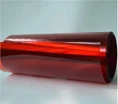


As a supplier of PVC Film Orange, I've received numerous inquiries about its hardness. Understanding the hardness of PVC Film Orange is crucial for various applications, from packaging to industrial uses. In this blog post, I'll delve into the concept of hardness in PVC Film Orange, its significance, and how it impacts different industries.
What is Hardness in PVC Film Orange?
Hardness in PVC (Polyvinyl Chloride) film refers to its resistance to indentation, scratching, and deformation. It is a fundamental property that determines the film's durability and performance in different environments. For PVC Film Orange, hardness is influenced by several factors, including the formulation of the PVC resin, the type and amount of plasticizers used, and the manufacturing process.
The hardness of PVC film is typically measured using the Shore durometer scale, which has two main types: Shore A and Shore D. Shore A is used for softer materials, while Shore D is for harder ones. PVC Film Orange can have a wide range of hardness values, depending on its intended use. For example, a softer PVC film with a lower Shore A value may be more flexible and suitable for applications where conformability is required, such as in food packaging or labels. On the other hand, a harder PVC film with a higher Shore D value may be more rigid and suitable for applications where strength and durability are essential, such as in industrial packaging or construction.
Factors Affecting the Hardness of PVC Film Orange
PVC Resin Formulation
The type of PVC resin used in the film production plays a significant role in determining its hardness. Different grades of PVC resins have varying molecular structures and properties, which can affect the film's hardness. For instance, a high-molecular-weight PVC resin generally results in a harder film compared to a low-molecular-weight one. Additionally, the presence of additives and modifiers in the resin formulation can also influence the hardness. Some additives, such as impact modifiers, can increase the toughness of the film without significantly affecting its hardness, while others, like plasticizers, can reduce the hardness and increase the flexibility.
Plasticizers
Plasticizers are chemicals added to PVC to increase its flexibility and workability. They function by reducing the intermolecular forces between the PVC molecules, allowing them to move more freely. The type and amount of plasticizers used in the PVC Film Orange formulation have a direct impact on its hardness. Generally, the more plasticizer is added, the softer the film becomes. For example, a PVC film with a high plasticizer content may have a Shore A hardness value of around 60 - 70, while a film with a low plasticizer content or no plasticizer at all may have a Shore D hardness value of 70 - 80 or higher.
Manufacturing Process
The manufacturing process of PVC Film Orange can also affect its hardness. Processes such as extrusion, calendering, and casting can influence the orientation and distribution of the PVC molecules in the film, which in turn affects its mechanical properties, including hardness. For example, during extrusion, the temperature, pressure, and speed of the process can impact the crystallization and orientation of the PVC molecules. A well-controlled extrusion process can result in a more uniform and harder film compared to a poorly controlled one.
Significance of Hardness in Different Industries
Packaging Industry
In the packaging industry, the hardness of PVC Film Orange is a critical factor. For food packaging, a softer PVC film may be preferred as it can easily conform to the shape of the product, providing a tight seal and protecting the food from contamination. The flexibility of the softer film also makes it easier to handle during the packaging process. On the other hand, for pharmaceutical packaging, a harder PVC film may be required to provide better protection against physical damage and to maintain the integrity of the medicine. Our Transparent Pharmaceutical Grade PVC Rigid Film With Different Color Of PE Material is an example of a product with appropriate hardness for pharmaceutical applications. It offers the necessary rigidity to safeguard the medicine while also being transparent for easy identification.
Industrial Applications
In industrial applications, the hardness of PVC Film Orange is essential for ensuring the film's performance under various conditions. For example, in the automotive industry, PVC films are used for interior trim, insulation, and protection. A harder PVC film can withstand abrasion, heat, and chemicals, making it suitable for these applications. In the construction industry, PVC films are used for roofing, flooring, and wall coverings. A harder film can provide better resistance to impact and weathering, ensuring long-term durability. Our Thermoforming PVC Transparent Rigid PVC Film is designed for industrial thermoforming applications, where its hardness allows it to maintain its shape and properties during the forming process.
Printing and Labeling
In the printing and labeling industry, the hardness of PVC Film Orange can affect the printing quality and durability of the labels. A harder film can provide a smoother surface for printing, resulting in sharper and more vibrant images. It can also resist scratching and abrasion during handling and use, ensuring that the labels remain intact and legible. Our amber color PVC Film For Medicine Packaging can also be used for printing labels for medicine packaging, where its appropriate hardness ensures high - quality printing and long - lasting performance.
Controlling the Hardness of PVC Film Orange
As a supplier, we have the expertise and technology to control the hardness of PVC Film Orange according to the specific requirements of our customers. We can adjust the PVC resin formulation, the type and amount of plasticizers, and the manufacturing process parameters to achieve the desired hardness. For example, if a customer needs a softer film for a particular application, we can increase the plasticizer content or use a lower - molecular - weight PVC resin. Conversely, if a harder film is required, we can reduce the plasticizer content or use a high - molecular - weight PVC resin.

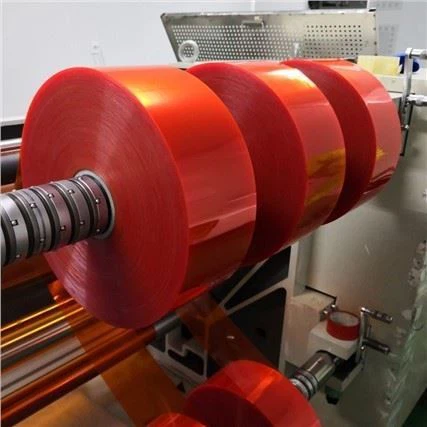
We also conduct rigorous quality control tests to ensure that the hardness of our PVC Film Orange meets the specified standards. Our quality control team uses advanced testing equipment, such as Shore durometers, to measure the hardness of the film accurately. We perform these tests at various stages of the production process, from raw material inspection to finished product testing, to ensure consistency and reliability.
Conclusion
The hardness of PVC Film Orange is a crucial property that affects its performance in various applications. Understanding the factors that influence hardness and how to control it is essential for ensuring the quality and suitability of the film for different industries. As a supplier of PVC Film Orange, we are committed to providing high - quality products with the right hardness for our customers' needs. Whether you need a soft and flexible film for packaging or a hard and rigid film for industrial applications, we have the expertise and resources to meet your requirements.
If you are interested in our PVC Film Orange products or have any questions about hardness or other properties, please feel free to contact us for a detailed discussion. We look forward to the opportunity to work with you and provide you with the best PVC film solutions.
References
- ASTM D2240 - 15, Standard Test Method for Rubber Property - Durometer Hardness.
- "Polyvinyl Chloride (PVC) Resins: Properties and Applications" by John V. Kennedy.
- "Plasticizers: Principles and Practice" by George Wypych.