


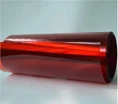


As a supplier of Metallized PVC Film, I often receive inquiries about its various properties, and one question that frequently comes up is, "What is the emissivity of Metallized PVC Film?" In this blog post, I'll delve into this topic, explaining what emissivity is, how it relates to Metallized PVC Film, and its practical implications in different applications.
Understanding Emissivity
Emissivity is a fundamental concept in thermodynamics and heat transfer. It is defined as the ratio of the thermal radiation emitted by a surface to the thermal radiation emitted by a perfect black body at the same temperature. A perfect black body has an emissivity of 1, meaning it emits the maximum amount of radiation possible at a given temperature. In contrast, a surface with an emissivity of 0 would not emit any thermal radiation.
Emissivity is influenced by several factors, including the material's composition, surface finish, and temperature. For example, rough surfaces generally have higher emissivities than smooth surfaces because they have more surface area for radiation to occur. Additionally, different materials have different emissivity values due to their unique molecular structures and electronic properties.
Emissivity of Metallized PVC Film
Metallized PVC Film is a composite material consisting of a PVC (polyvinyl chloride) base layer coated with a thin layer of metal, typically aluminum. The emissivity of Metallized PVC Film is primarily determined by the properties of the metal coating. Aluminum, which is commonly used in metallized films, has a relatively low emissivity value.
The emissivity of aluminum can range from approximately 0.03 to 0.1, depending on the surface finish and purity of the aluminum. When aluminum is applied as a thin coating on a PVC substrate, the emissivity of the resulting Metallized PVC Film will be influenced by both the aluminum coating and the PVC base layer. However, since the aluminum coating is usually the dominant factor in determining the film's thermal radiation properties, the emissivity of Metallized PVC Film is generally low, similar to that of aluminum.
In practical terms, a low emissivity means that Metallized PVC Film is a good reflector of thermal radiation. This property makes it useful in applications where heat insulation or radiation shielding is required. For example, in packaging applications, Metallized PVC Film can help to reduce the transfer of heat between the packaged product and the external environment, thereby extending the shelf life of perishable goods.
Applications of Metallized PVC Film Based on Emissivity
Packaging
One of the most common applications of Metallized PVC Film is in packaging. Its low emissivity makes it an ideal material for packaging products that are sensitive to heat, such as food, pharmaceuticals, and electronics. By reflecting thermal radiation, Metallized PVC Film can help to maintain a stable temperature inside the package, protecting the product from spoilage, degradation, or damage.
For example, Pharma Pvc Blister Packaging often uses Metallized PVC Film to provide a barrier against heat and moisture, ensuring the integrity of the pharmaceutical products. Similarly, Clear PVC Film for Fruit Container can be enhanced with a metallized layer to improve its insulation properties and extend the freshness of the fruits.


Insulation
Metallized PVC Film is also used in insulation applications, such as in building construction and automotive interiors. In building insulation, Metallized PVC Film can be used as a radiant barrier to reflect heat away from the building, reducing the energy consumption for heating and cooling. In automotive interiors, it can be used to insulate the cabin from engine heat, improving passenger comfort.
Solar Energy
In the solar energy industry, Metallized PVC Film can be used as a backsheet for photovoltaic modules. Its low emissivity helps to reduce the heat loss from the solar cells, improving the efficiency of the solar panels. Additionally, the reflective properties of the Metallized PVC Film can enhance the absorption of sunlight by the solar cells, further increasing the power output of the solar panels.
Factors Affecting the Emissivity of Metallized PVC Film
While the emissivity of Metallized PVC Film is primarily determined by the aluminum coating, there are several factors that can affect its actual emissivity value. These factors include:
- Coating Thickness: The thickness of the aluminum coating can have a significant impact on the emissivity of the Metallized PVC Film. A thicker coating generally results in a lower emissivity, as it provides a more effective barrier against thermal radiation.
- Surface Finish: The surface finish of the aluminum coating can also affect the emissivity. A smooth, polished surface will have a lower emissivity than a rough, textured surface.
- Oxidation: Over time, the aluminum coating on Metallized PVC Film may oxidize, which can increase its emissivity. Oxidation occurs when the aluminum reacts with oxygen in the air to form aluminum oxide, which has a higher emissivity than pure aluminum.
- PVC Substrate: The properties of the PVC substrate can also influence the emissivity of the Metallized PVC Film. For example, the type of PVC resin, the presence of additives, and the thickness of the PVC layer can all affect the overall thermal radiation properties of the film.
Measuring the Emissivity of Metallized PVC Film
Measuring the emissivity of Metallized PVC Film can be challenging, as it requires specialized equipment and techniques. One common method for measuring emissivity is the calorimetric method, which involves measuring the heat transfer rate between the film and a reference surface at a known temperature. Another method is the spectral emissivity measurement, which involves measuring the emissivity of the film at different wavelengths of radiation.
In industrial settings, manufacturers often rely on standardized testing methods to ensure the quality and consistency of their Metallized PVC Film products. These testing methods typically involve using calibrated instruments and following strict procedures to obtain accurate and reliable emissivity measurements.
Conclusion
In conclusion, the emissivity of Metallized PVC Film is an important property that determines its performance in various applications. Due to the low emissivity of the aluminum coating, Metallized PVC Film is a good reflector of thermal radiation, making it useful for heat insulation, radiation shielding, and energy conservation. However, the actual emissivity of Metallized PVC Film can be affected by several factors, such as coating thickness, surface finish, oxidation, and the properties of the PVC substrate.
As a supplier of Metallized PVC Film, we are committed to providing high-quality products with consistent emissivity values. Our Metallized PVC Film is carefully manufactured using advanced processes and materials to ensure optimal performance in a wide range of applications. If you are interested in learning more about our Metallized PVC Film products or have any questions about emissivity or other properties, please feel free to contact us. We look forward to discussing your specific requirements and providing you with the best solutions for your packaging and insulation needs.
References
- Incropera, F. P., & DeWitt, D. P. (2002). Fundamentals of Heat and Mass Transfer. Wiley.
- Holman, J. P. (2002). Heat Transfer. McGraw-Hill.
- ASTM International. (2019). Standard Test Method for Emittance of Materials Near Room Temperature Using Portable Emissometers. ASTM C1371-19.