




As a supplier of PVC hard film, I've witnessed firsthand the diverse applications and unique chemical interactions of this versatile material. PVC hard film, known for its rigidity, durability, and clarity, is widely used in various industries, from packaging to construction. Understanding how it reacts with different chemicals is crucial for ensuring its optimal performance and safety in different environments.
General Chemical Resistance of PVC Hard Film
PVC hard film generally exhibits good resistance to a wide range of chemicals. It is resistant to many acids, bases, and salts under normal conditions. For instance, it can withstand weak acids such as acetic acid, which is commonly found in household vinegar. This resistance makes PVC hard film suitable for packaging acidic food products like pickles and sauces.
In the case of bases, PVC hard film shows moderate resistance to weak bases. Sodium hydroxide solutions of low concentration may not cause significant damage to the film over a short period. However, prolonged exposure to strong bases can lead to degradation of the PVC material. The hydroxyl ions in strong bases can react with the chlorine atoms in PVC, causing dehydrochlorination and subsequent chain scission of the polymer.
Salts also have varying effects on PVC hard film. Most common salts, such as sodium chloride (table salt), have little impact on the film's integrity. However, some salts with high oxidizing potential, like ferric chloride, can cause discoloration and surface damage to the PVC hard film over time.
Reactions with Organic Solvents
The reaction of PVC hard film with organic solvents is more complex. PVC is generally insoluble in water but has different degrees of solubility or swelling in various organic solvents.
Aliphatic Hydrocarbons
Aliphatic hydrocarbons, such as hexane and heptane, have a relatively low interaction with PVC hard film. These solvents typically do not dissolve PVC but may cause some degree of swelling if the film is exposed for an extended period. The non - polar nature of aliphatic hydrocarbons means they have limited ability to disrupt the intermolecular forces within the PVC polymer.
Aromatic Hydrocarbons
Aromatic hydrocarbons, like toluene and benzene, have a stronger interaction with PVC hard film. These solvents can cause significant swelling and, in some cases, dissolution of the PVC material. The π - electron cloud in aromatic hydrocarbons can interact with the polar groups in PVC, leading to the penetration of the solvent molecules into the polymer matrix and subsequent swelling or dissolution.
Chlorinated Solvents
Chlorinated solvents, such as dichloromethane and chloroform, are highly effective at dissolving PVC hard film. The chlorine atoms in these solvents can interact with the PVC polymer, disrupting the intermolecular forces and causing rapid dissolution. This property is sometimes exploited in industrial processes for recycling or removing PVC residues.
Impact of Chemical Reactions on Applications
The chemical reactions of PVC hard film have a significant impact on its applications. In the packaging industry, for example, the chemical resistance of PVC hard film is crucial for ensuring the safety and quality of the packaged products.
Medical Packaging PVC Film is designed to protect medical products from contamination and chemical degradation. It must be resistant to the chemicals used in the sterilization process, such as ethylene oxide and hydrogen peroxide. PVC hard film with good chemical resistance can maintain its integrity during sterilization, ensuring the long - term stability of the medical products.
40g 60g 90g PVC - PVDC Film is often used for packaging food and pharmaceutical products. The addition of PVDC (polyvinylidene chloride) enhances the barrier properties of the film, reducing the permeation of oxygen, moisture, and chemicals. This is particularly important for products that are sensitive to chemical reactions, such as vitamins and antibiotics.
Transparent Rigid PVC Film is widely used in the display and signage industry. Its chemical resistance ensures that it can withstand environmental factors such as exposure to rain, sunlight, and air pollutants. However, if the film is exposed to chemicals that cause swelling or discoloration, its aesthetic and functional properties may be compromised.
Factors Affecting Chemical Reactions
Several factors can affect the chemical reactions of PVC hard film. Temperature is one of the most important factors. Higher temperatures generally accelerate chemical reactions. For example, the reaction of PVC hard film with strong bases or organic solvents is more rapid at elevated temperatures. This is because the increased thermal energy provides more kinetic energy to the molecules, facilitating the interaction between the chemical and the PVC polymer.
The concentration of the chemical also plays a crucial role. A higher concentration of a reactive chemical will generally cause more severe damage to the PVC hard film. For instance, a concentrated solution of hydrochloric acid will cause more rapid degradation of the film compared to a dilute solution.
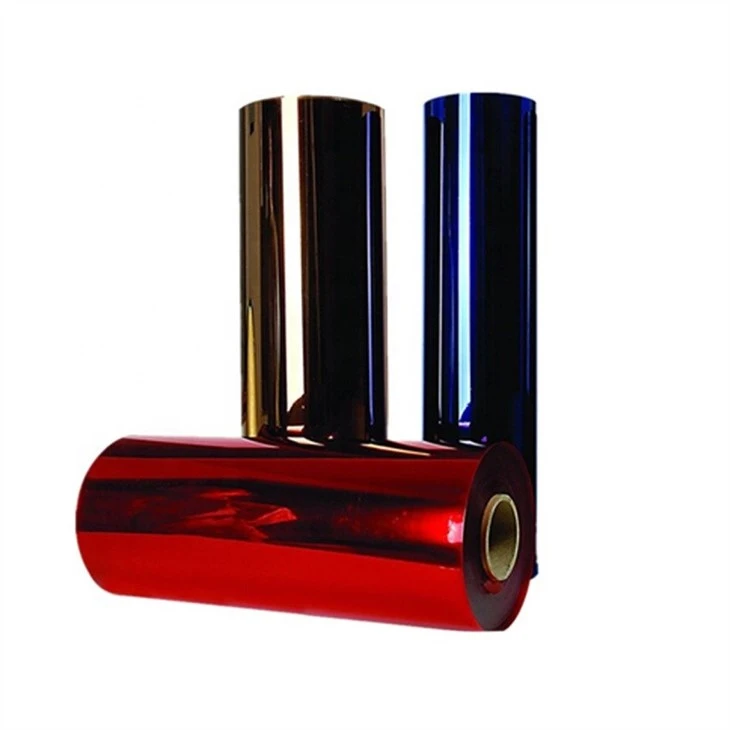

The duration of exposure is another important factor. Even a relatively mild chemical can cause significant damage to the PVC hard film if the exposure time is long enough. Therefore, in applications where PVC hard film is in contact with chemicals, it is important to limit the exposure time to minimize the risk of chemical degradation.
Testing and Quality Control
As a PVC hard film supplier, we conduct rigorous testing to ensure the chemical resistance of our products. We use a variety of methods, including immersion tests, where samples of the PVC hard film are immersed in different chemicals for a specified period. After the immersion, the samples are evaluated for changes in appearance, weight, and mechanical properties.
We also perform spectroscopic analysis, such as Fourier - transform infrared spectroscopy (FTIR), to identify any chemical changes in the PVC hard film. This allows us to detect the formation of new chemical bonds or the degradation of the polymer structure.
In addition to in - house testing, we also comply with international standards and regulations for chemical resistance. This ensures that our PVC hard film products meet the highest quality and safety requirements for different applications.
Conclusion
In conclusion, the chemical reactions of PVC hard film with different chemicals are complex and depend on various factors such as the type of chemical, temperature, concentration, and exposure time. Understanding these reactions is essential for selecting the appropriate PVC hard film for different applications and ensuring its long - term performance and safety.
As a leading supplier of PVC hard film, we are committed to providing high - quality products with excellent chemical resistance. Our Medical Packaging PVC Film, 40g 60g 90g PVC - PVDC Film, and Transparent Rigid PVC Film are carefully formulated and tested to meet the diverse needs of our customers.
If you are interested in purchasing our PVC hard film products or have any questions about their chemical resistance, please feel free to contact us for further discussion. We look forward to partnering with you to provide the best solutions for your specific applications.
References
- Billmeyer, F. W. (1984). Textbook of Polymer Science. Wiley - Interscience.
- ASTM International. (2023). ASTM standards related to plastics and polymers.
- Carraher, C. E. (2008). Polymer Chemistry. Marcel Dekker.